Impound/Non-Owner Vehicle Release Notarization
Mobile notary for impound vehicle release at Las Vegas tow yards. We come to Ewing Brothers, Quality, Fast, Ashley's, Walker, Snap. Same-day service. (702) 748-7444
NNA Certified Notary Signing Agent 2025 badge for Lake Mead Mobile Notary
πŸ’°
Pricing
$45
Starting Base Fee
Same-Day Service: Tow yard and impound lot visits included. Additional signers $15 each. Emergency after-hours available.
Having trouble viewing the booking form? VPN connections may interfere with form functionality. For immediate service, please disable your VPN or call us directly at (702) 748-7444.
Impound/Non-Owner Vehicle Release – Notarization | Lake Mead Mobile Notary
πŸš—
Service Details
Vehicle & DMV

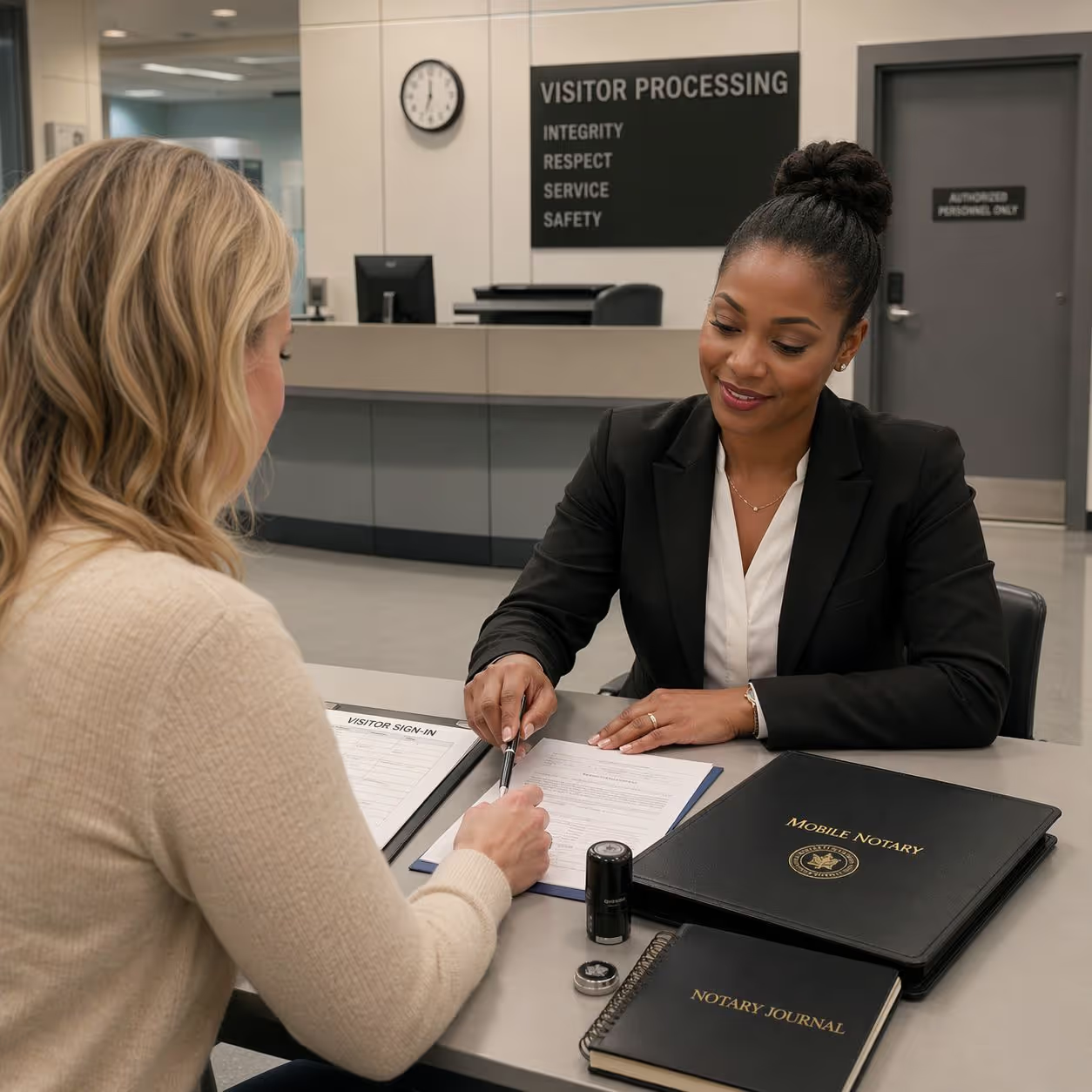
Lake Mead Mobile Notary provides on-site notarization for vehicle release letters and impound lot authorizations throughout Las Vegas Valley. We meet you at tow yards, impound lots, or any location to notarize the documents required for vehicle releaseβ€”whether you're picking up a vehicle for a family member, processing an insurance claim, authorizing a company/fleet pickup, or releasing a vehicle for an incarcerated owner.

Common scenarios include: owner authorizing a friend or family member to retrieve their vehicle; insurance company authorizing adjuster or contractor pickup; company/fleet manager authorizing employee vehicle release; attorney or family member releasing a vehicle on behalf of an incarcerated owner; and out-of-state owner authorizing local representative.

We serve all Ewing Brothers, Quality Towing, Fast Towing, Ashley's Towing, Walker Towing, Snap Towing locations, and all LVMPD/Henderson PD/Boulder City PD contract facilities. Same-day appointments available throughout Henderson, North Las Vegas, and all of Clark County.

πŸ“‹
Step-by-Step Process
1
Contact Tow Yard Confirm the vehicle is at the facility and determine required documentation (release letter, proof of ownership, yard fees paid).
2
Prepare Release Letter Complete all required fields: vehicle owner information, vehicle details (year/make/model/VIN), authorized person's name and ID info, purpose of release.
3
Schedule Mobile Notary Call/text (702) 748-7444 or book online. We coordinate arrival time with tow yard access and your schedule.
4
Meet at Facility We meet you at the tow yard office/cashier window. Bring your government-issued photo ID and any supporting documents required by the facility.
5
Identity Verification Present valid ID (driver's license, passport, state ID, military ID). We verify identity and review the release letter for completeness.
6
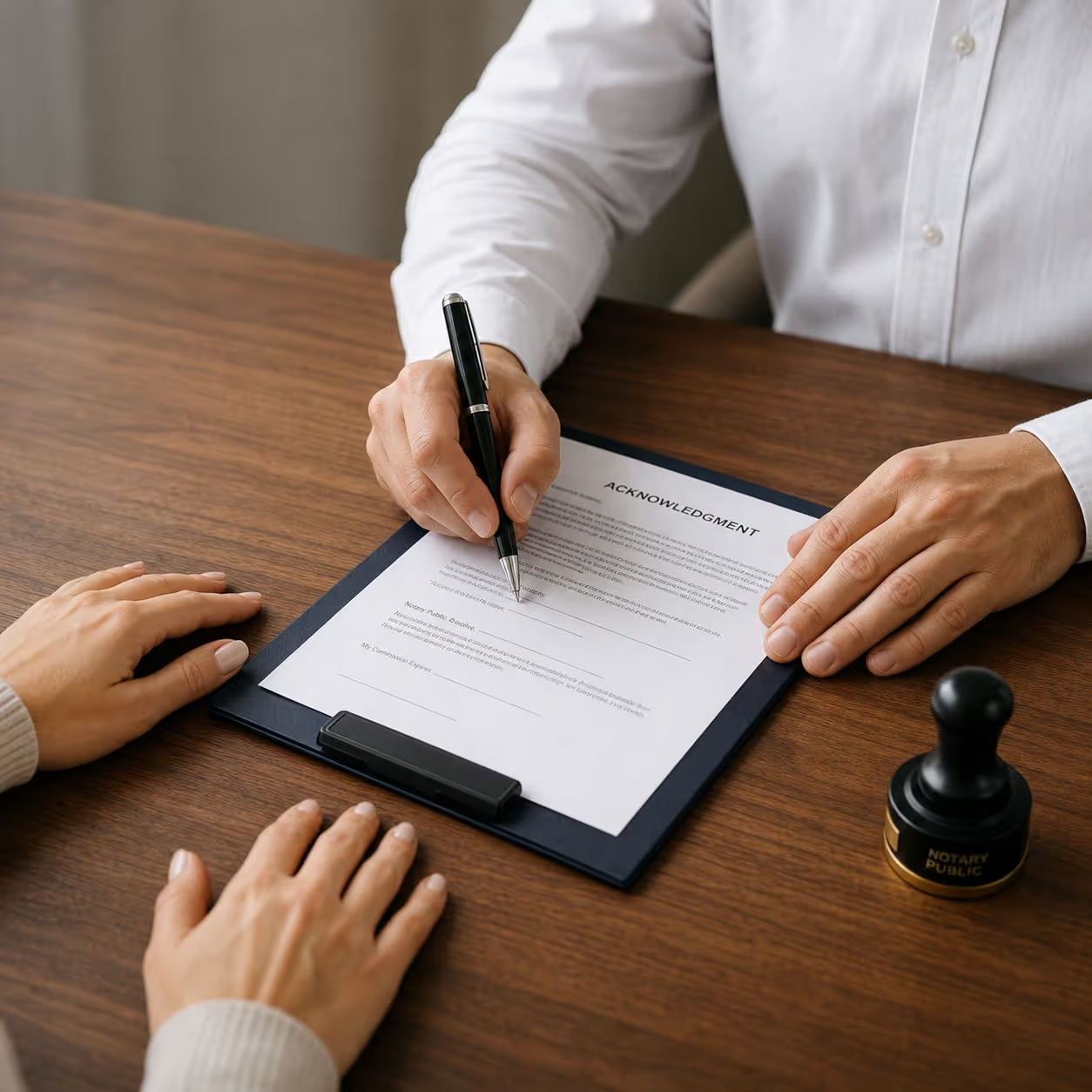
Notarization & Seal Sign the release letter in our presence. We complete Nevada notarial certificate, record required information, and apply official seal.
7
Submit to Tow Yard Present notarized release letter to facility staff along with any other required documents. Pay yard fees and retrieve vehicle per facility procedures.
8
Additional Services Need bill of sale or title transfer notarized too? We handle multiple documents in same visit.
πŸ“„
Documents Required
Valid government-issued photo ID (driver's license, passport, state ID, military ID)
Completed vehicle release letter with VIN, vehicle description, owner info, authorized person details
Proof of vehicle ownership if required by facility (title, registration, DMV printout, dealer report of sale)
Tow yard release authorization or police release if vehicle was on hold
Proof of payment for tow/storage fees (or arrange payment with facility before notarization)
Power of attorney if signing on behalf of owner (corporate authority docs if company vehicle)
For incarcerated owners: jail visitation confirmation and jail visit notarization may be required
For insurance claims: insurance authorization letter or adjuster assignment documentation
Any additional forms required by specific tow yard (call facility in advance to confirm)
Enhance Your Service
Professional add-ons for tow yard and impound lot notarizations
πŸ“„
Extra Documents
$10 each
Additional release letters or forms
✍️
Additional Signatures
$15 each
Multiple signers (NRS 240.100)
⏰
Wait Time
$15 per 15 min
After 10-minute grace period
πŸš—
Mileage
$1.50/mile
After first 10 miles included
πŸŒ™
After-Hours
$25 surcharge
6 PM - 9 AM (facility hours permitting)
🚨
Emergency
Starts at $45
Urgent same-hour requests
⚑
Rush Service
$50 fee
Same-day if schedule permits
🏒
Multiple Facilities
Custom Quote
Fleet/company batch service

Ready to Schedule Your Vehicle Release Notarization?

Same-day service at Ewing Brothers, Quality, Fast, Ashley's, Walker, Snap, and all Clark County tow yards. We come to you.

Book Appointment

Need professional photos for your property listing?

Real Estate PhotographyProperty Video & Walkthroughs

Need professional documentation services?

Professional Photography ServicesAdmin Support for Realtors

Need branding for your new business?

Realtor Headshots & BrandingReal Estate Websites & SEO

related services

N
After I do lien sale and sell the vehicle at auction, do I owe the original owner or bank any excess money from the sale?

Yes. Nevada law (NRS 108.297) requires you to account for and pay any surplus from the lien sale. After recovering your documented towing, storage, and auction fees, you must pay excess proceeds first to lienholders, then to the vehicle owner. You cannot simply keep all auction proceeds because you obtained clean title through VP-147. This is one of the most misunderstood aspects of Nevada lien sales.

A shocked Reddit discussion illustrates the confusion: "I always thought the right thing would be for the tow vendor to pay any excess from the sale over their storage costs to the lienholder but they take possession of the whole vehicle?" The answer: Taking possession for lien sale is legal, but keeping surplus proceeds beyond documented costs is illegal conversion of property.

πŸ“‹ Nevada Surplus Distribution Hierarchy (NRS 108.297):

  1. First priority - Your documented costs: Towing charges, storage fees at your posted daily rate, administrative costs for title search and certified mail, auction fees
  2. Second priority - Lienholders on DMV record: If auction sale exceeds your costs, remaining funds go to the first lienholder (bank) up to the amount of their lien. If surplus still remains, it goes to second lienholder if applicable
  3. Third priority - Original owner: Any remaining surplus after lienholder(s) are paid must be sent to the registered owner at their DMV-registered address via certified mail
  4. Unclaimed surplus: If owner doesn't respond to surplus notification within required time (typically 30-60 days), consult legal counsel about escheat to the state

⚠️ Real-World Example of Surplus Calculation:

  • Vehicle sells at Copart for $8,500
  • Your documented costs: Towing $250, storage 45 days at $30/day = $1,350, auction fees $400 = $2,000 total
  • Remaining: $6,500 surplus
  • Lienholder on DMV record: Bank with $12,000 lien = Bank gets entire $6,500
  • Nothing left for owner (their debt to bank reduced by $6,500)

Different scenario - No lien on record:

  • Same $8,500 sale price, same $2,000 costs
  • No lienholder on DMV title
  • You must send $6,500 to the registered owner with accounting of costs and surplus calculation

πŸ’‘ Why This Matters for VP-147 Compliance: When you sign your notarized VP-147 affidavit, you're swearing under oath that you followed Nevada's lien sale procedures. Part of those procedures is accounting for surplus. If the owner later discovers you kept $5,000 in surplus that legally belonged to them or their lender, you face: (1) civil lawsuit for conversion, (2) potential perjury charges for false VP-147 affidavit, (3) loss of your tow operator license, (4) criminal charges for theft by conversion.

🏒 Best Practice for Tow Operators: Create a standard surplus calculation worksheet for every lien sale. Document: (1) Auction gross proceeds, (2) Itemized costs (towing, storage with daily rate and number of days, title search, certified mail, auction fees), (3) Net surplus calculation, (4) Lienholder payment if applicable with proof of payment, (5) Owner surplus payment with certified mail proof of delivery. Keep these records for 3-5 years. When we notarize VP-147 forms at Sun City Aliante or other Clark County tow yards, we can review your surplus calculation to ensure it's properly documented before you sign under oath.

Related Questions

N
What if certified mail comes back "undeliverable" or "refused"? Can I still proceed with lien sale and VP-147?

Yes, you can proceed with VP-147 lien sale even if certified mail returns as "undeliverable," "attempted - not known," or "refused." Nevada law requires you to attempt proper notification at the DMV-registered address, but you're not responsible if the owner moved without updating their address or refuses to accept the letter. The key is documenting your good-faith notification attempt.

This is the second most discussed lien sale question on automotive forums and r/legaladvice. Tow operators panic when certified mail comes back weeks after sending, thinking the entire lien sale process must start over. That's not correct. What matters is that you sent notification to the correct address on file with Nevada DMV at the time you mailed it.

πŸ“‹ How to Document Undeliverable Certified Mail for VP-147:

  • Keep the returned envelope: The envelope with USPS markings showing "undeliverable," "moved - no forwarding address," "refused," or "unclaimed" is your proof of notification attempt
  • Keep the certified mail receipt: The green receipt showing you sent certified mail on [date] to [address from DMV records]
  • Make copies for your VP-147 packet: Include copies of both the receipt and the returned envelope with your notarized VP-147 when submitting to auction or DMV
  • Note the return date on your VP-147: In the notification section, write "Certified mail sent [date], returned undeliverable [date] - proof attached"

⚠️ Critical Distinction - Undeliverable vs. Never Sent: Nevada courts and DMV distinguish between "mail returned undeliverable" (proper notification attempt) and "mail never sent" (no notification attempt). If you skip certified mail entirely and claim the owner "couldn't be found," your VP-147 will be rejected and you could face liability for wrongful sale. But if you can prove you sent certified mail to the DMV-registered address and USPS returned it undeliverable, you've met Nevada's notification requirement.

πŸ’‘ The 30-Day Waiting Period Starts When You Mail It: Confusion exists about when the clock starts. The 30-day waiting period begins on the date you send certified mail, not when it's delivered or returned. Example: You mail certified letters on May 1st to owner and lienholder. Owner's letter is delivered May 4th (signed green card returned). Lienholder's letter returns undeliverable May 8th. You can still proceed with lien sale on June 1st (30 days after May 1st mailing date) because you attempted notification to both parties.

🏒 Real-World Example from Las Vegas Tow Yard: Tow company in Boca Park area towed abandoned vehicle from apartment complex. DMV records showed owner at an address in Henderson. Certified mail sent September 1st, returned "moved - no forwarding address" September 9th. Tow company kept the returned envelope, waited until October 2nd (31 days after mailing), then had VP-147 notarized at their facility. Auction accepted the vehicle because notification attempt was properly documented. The vehicle sold, title transferred to buyer with no issues.

⚠️ When Undeliverable Mail Becomes a Problem: If certified mail to the lienholder (bank) returns undeliverable AND you cannot locate the bank through research (merger, acquisition, failure), consult an attorney before proceeding. While owner notification can be satisfied with undeliverable mail, lienholder notification may require additional steps if the lien is recent and valuable.

Related Questions

N
Do I need to send certified mail to BOTH the vehicle owner AND the lienholder (bank)? What if I can't find the lienholder information?

Yes. Nevada law (NRS 108.270) requires you to send certified mail, return receipt requested, to both the registered owner AND all lienholders shown on the DMV title record. Missing either notification invalidates your entire VP-147 lien sale process, even if you properly notified the owner. This is the number one reason auction houses reject VP-147 submissions from tow operators.

The confusion is understandable. A former tow operator explains on automotive forums: "Tow company has to send 3 certified letters to both the titled owner and the lien holder over about 6 week period before they can lien sale the vehicle." But what happens when the lienholder is a bank that merged, went out of business, or has an outdated address on the DMV record?

πŸ“‹ Nevada's Dual Notification Requirement Explained:

  • Registered owner notification: Required because they own the vehicle subject to the lien. Must use address from DMV registration records, even if you know it's outdated
  • Lienholder notification: Required because they have a secured interest in the vehicle. The lender loaned money against the vehicle and has first rights to any sale proceeds
  • Multiple lienholders: If DMV records show two lienholders (first lien and second lien), you must notify both separately
  • Timing: Send both certified letters on the same day; the 30-day waiting period runs from the date of mailing

⚠️ What If You Can't Find Current Lienholder Information? If the lienholder on DMV records is a bank that no longer exists (merged, acquired, or failed), you have several options:

  • Research the successor bank: Wells Fargo acquired Wachovia, Chase acquired WaMu, etc. Send certified mail to the current entity at their registered agent address
  • Contact Nevada DMV Title Research: They can sometimes provide updated lienholder contact information for lien sale purposes ($15 title search fee)
  • Document your good-faith effort: Keep records of your research attempts (internet searches, phone calls to bank customer service, successor bank inquiries). If certified mail returns undeliverable, this documentation supports your VP-147
  • Consider legal consultation: For high-value vehicles or complex lien situations, consult an attorney before proceeding with lien sale. Wrongful sale to a vehicle with valid lien = potential lawsuit

πŸ’‘ The Most Common Mistake: Tow operators send certified mail only to the registered owner, assuming the bank "knows" the vehicle was towed because the owner stopped making payments. Wrong. The lienholder must receive independent notification of the impending lien sale. Without proof of certified mail to the lienholder (green return receipt or returned undeliverable envelope), your notarized VP-147 affidavit will be rejected by Pahrump auctions, Copart, IAA, and DMV during title transfer processing.

🏒 We provide on-site VP-147 notarization at tow yards throughout Aliante, North Las Vegas, and Clark County. During your notarization appointment, we can review your certified mail documentation to ensure both owner and lienholder notifications are properly documented before you sign the affidavit under oath.

Related Questions

N
How much are the reinstatement fees if I use NVL-003 vs. if I don't? What's the actual cost difference?

With properly notarized NVL-003 Dormant Vehicle Affidavit, Nevada DMV reinstatement costs $252 total. Without NVL-003 (because you drove during the lapse), you face operating without insurance court penalties of $500-$1,000 for first offense, $1,000-$1,500 for second offense within 3 years, plus the $252 DMV reinstatement fee, totaling $752-$1,752.

This cost difference explains why NVL-003 generates so much discussion across insurance forums. The savings are substantial, but only if your situation legitimately qualifies (vehicle was truly not driven during suspension).

πŸ’° Complete Cost Breakdown by Scenario:

Reinstatement Method Total Cost Timeline
With NVL-003 (Vehicle Was Dormant)
New insurance + notarized NVL-003 + $252 DMV fee
$697-$1,097 1-2 business days
Without NVL-003 (Drove During Lapse - First Offense)
New insurance + traffic court fine ($500-$1,000) + $252 DMV fee
$1,152-$1,752 2-4 weeks (court processing)
Without NVL-003 (Drove During Lapse - Second Offense)
New insurance + traffic court fine ($1,000-$1,500) + $252 DMV fee + SR-22 requirement
$1,652-$2,252 3-6 weeks + 3 years SR-22
False NVL-003 Later Discovered (Perjury Charges)
Operating penalties + perjury charges + DMV fraud + license suspension + legal defense
$5,000-$15,000+ 6-12 months legal process

πŸ“‹ What's Included in the $252 DMV Reinstatement Fee: This is Nevada's standard registration reinstatement fee when insurance compliance is restored. It applies whether you use NVL-003 or pay court penalties. The difference is that NVL-003 lets you avoid the additional $500-$1,500 operating without insurance fines by certifying the vehicle was never driven.

⚠️ Why NVL-003 Must Be Notarized: DMV requires proper jurat notarization because the affidavit is your sworn legal defense against operating without insurance charges. Without notarization, DMV rejects the form and requires the court penalty route. Mobile notary service costs $45 for NVL-003 notarization, providing immediate savings of $455-$1,405 compared to the operating penalty route.

πŸ’‘ The Math for Honest Drivers: Insurance payment failed, you parked the car immediately, used rideshare for 2 weeks until you noticed the lapse. Your costs with NVL-003: New insurance ($400-800 for 6 months) + NVL-003 notarization ($45) + DMV reinstatement ($252) = $697-$1,097 total. Without NVL-003 you'd pay: Same insurance + court fine ($500-$1,000) + DMV fee ($252) = $1,152-$1,752. The notarized NVL-003 saves you $455-$655 by documenting that you acted responsibly when you discovered the lapse.

🏠 We provide same-day NVL-003 notarization at your home throughout Silverado Ranch, Henderson, and all of Clark County, ensuring proper jurat certificates that DMV accepts for the lower reinstatement fee.

Related Questions

N
What documents do I need to retrieve my car from a tow yard or impound lot?

To retrieve a vehicle from a Las Vegas or Henderson tow yard, you need four core documents: valid government-issued ID, proof of vehicle ownership (title or registration), current insurance card, and tow yard release authorization. If the vehicle is repossessed or impounded for violations, you'll also need notarized forms depending on your situation.

πŸ“‹ Standard Tow Yard Retrieval (Owner Present):

  • Valid photo ID: Driver's license, state ID, passport, or military ID (must match vehicle registration)
  • Proof of ownership: Vehicle title, current registration card, or DMV registration receipt
  • Proof of insurance: Current Nevada auto insurance card (not expired)
  • Payment method: Cash, credit card, or cashier's check for towing and storage fees ($200-800 typical)

🚨 Situations Requiring Notarized Documents:

  • Non-owner retrieval: Family member, spouse, or friend picking up the vehicle needs notarized VP-136 Power of Attorney
  • Repossession release: Lender redemption requires notarized VP-020 Repossession Affidavit
  • Title complications: Out-of-state titles or lost titles may require notarized affidavits of ownership
  • Business vehicles: Corporate authorization letters must be notarized with proof of signatory authority
  • Estate vehicles: Deceased owner situations require notarized executor/administrator authorization

⏰ Timeline Matters: Tow yard storage fees in Spring Valley and surrounding areas typically run $35-50 per day. Missing required notarized documents adds 2-5 days to retrieval, costing $70-250 in avoidable storage fees. Lake Mead Mobile Notary meets you at tow yards throughout Clark County to notarize authorizations on-site, enabling same-day vehicle release.

πŸ’‘ Pro Tip: Call the tow yard before going. Ask specifically what documents they require for your situation. If notarization is needed, schedule a mobile notary appointment to meet you at the facility, avoiding multiple trips and additional storage costs.

Related Questions

N
How do I release my vehicle from a Las Vegas tow yard?

Contact the tow yard facility, verify vehicle location and required documentation, obtain notarized non-owner authorization if needed, pay all towing and storage fees, and retrieve your vehicle. Mobile notary service provides on-site coordination at all Clark County tow yards, eliminating 3-4 hours of travel time and preventing $80-150 daily storage fee accumulation throughout Henderson and Las Vegas Valley.

Registered owners present valid government photo ID matching vehicle registration. Non-owners need notarized authorization letters or Nevada DMV Form VP-136 power of attorney from the registered owner. Search AutoReturn website for LVMPD-contracted tow yards, or contact facilities directly with your license plate or VIN.

πŸ“‹ Required Documents:

  • Valid government-issued photo ID (Nevada license, passport, state ID, military ID)
  • Vehicle registration or insurance card showing ownership
  • Notarized authorization letter or VP-136 (if non-owner retrieval)
  • Payment method for towing and storage fees (credit card, cash, or check per facility policy)
  • Tow yard case or reference number

⏱️ Mobile Notary Process:

  • Book appointment for tow yard office or parking area
  • Typical arrival time: 30-60 minutes for same-day requests
  • Notary executes authorization documents on-site
  • Submit notarized documents to facility immediately
  • Complete payment and retrieve vehicle same visit

Related Questions

Featured Locations