Secure Power of Attorney VP-221 Notarization for Nevada Dealers, Auctions and Lienholders
Lake Mead Mobile Notary provides mobile VP-221 secure power of attorney notarization for Nevada dealers, auctions, lien services and title processors handling vehicle transactions when the physical title is not immediately available.
The Nevada Secure Power of Attorney (Form VP-221) is used when mileage must be disclosed and ownership must be transferred by an authorized party using power of attorney, such as when a title is lost, held by a lienholder, or stored electronically.
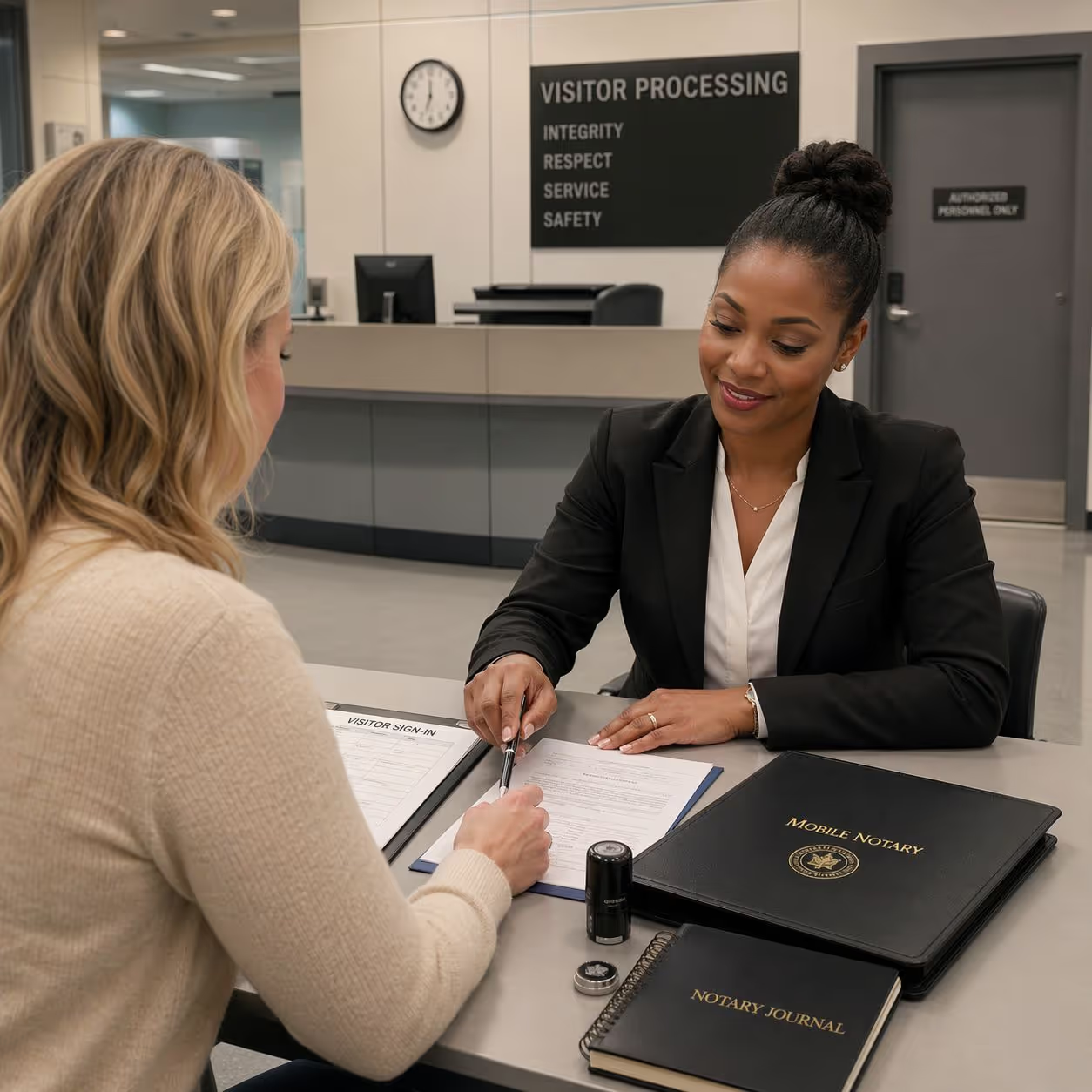
During each appointment, the notary verifies the identity of the person exercising the secure power of attorney, witnesses their signature on VP-221, and completes the notarial certificate so the form can be attached to the title and used in the transaction under applicable DMV and federal odometer rules.
Before scheduling, dealers and auctions should confirm that VP-221 is the correct form for the situation, which parts will be completed, how odometer information must be recorded, and how copies of the secure power of attorney will be retained with title documents.
Usage Context
When Nevada Dealers Use VP-221 Secure Power of Attorney
Secure power of attorney supports odometer disclosure and title transfer when the physical title is not available.
Secure power of attorney forms such as Nevada’s VP-221 are used in specific vehicle transactions when odometer disclosure is still required but the certificate of title is unavailable or held by a lienholder.
Typical scenarios include trades or purchases where the seller’s title is lost, in the lienholder’s possession, or stored electronically, and dealers or auctions must complete odometer disclosure and transfer ownership under federal mileage rules and DMV procedures.
By using VP-221 correctly, dealers and auctions can have an authorized attorney-in-fact disclose mileage, review title documents when they become available, and certify information for transfer while keeping records aligned with federal and state guidance.
Notary Role
Notary Role and Limits in VP-221 Transactions
VP-221 signatures must be handled carefully, but the notary’s responsibilities are focused and defined.
When a dealer representative, auction clerk or other authorized person signs VP-221 as attorney-in-fact, the notary’s role is to verify identity, confirm willingness and awareness of what is being signed, and complete the requested lawful notarial act on the form.
The notary does not select whether VP-221 should be used instead of VP-136 or direct title signing, does not interpret federal mileage regulations or DMV policies, and does not guarantee that any transaction will be accepted by the Department or other authorities.
Instead, the notary ensures that the signature on VP-221 is properly witnessed and that the notarial certificate is completed in accordance with Nevada notary law, so the secure power of attorney can be attached to title records as required.
Form Differences
VP-221 vs VP-136 and Direct Title Signing
Understanding how VP-221 relates to standard vehicle powers of attorney and title transfers helps avoid misuse.
VP-136 Vehicle Power of Attorney
VP-136 is a general vehicle power of attorney used when a motor vehicle owner authorizes another person to sign title or registration documents and the title is available or can be obtained in the ordinary course.
VP-221 Secure Power of Attorney
VP-221 is a secure power of attorney used when mileage must be disclosed and title is lost, held by a lienholder or stored electronically, so odometer disclosure and signature must occur through an authorized attorney-in-fact.
Direct title signing without power of attorney
When title is accessible and the parties can sign directly, federal mileage law usually expects odometer disclosure on the title itself instead of through secure power of attorney.
Choosing the correct approach
Dealers and auctions must determine whether VP-221, VP-136 or direct title signing is appropriate based on title status, mileage requirements and DMV instructions for the transaction.
Appointment Preparation
Documents and Information Dealers Should Prepare
Organized paperwork keeps secure power of attorney appointments efficient and compliant.
Identify whether VP-221 applies
Confirm title status, mileage disclosure requirements and DMV instructions to determine whether VP-221 is required for the transaction.
Complete VP-221 details before the visit
Fill in vehicle description, parties’ names, addresses and mileage fields as instructed, leaving signature and notarial sections blank for the appointment.
Gather supporting title and lien records
Prepare existing title copies, lienholder statements or loan documents that support how ownership and security interests will be handled.
Confirm who will act as attorney-in-fact
Decide which authorized representative will sign VP-221, and ensure they understand their role and have authority for the transaction.
Ensure the signer has valid identification
Verify that the person exercising the secure power of attorney has valid, unexpired government-issued photo ID available.
Review internal compliance procedures
Dealers and auctions should review their own compliance checklists and odometer policies before the appointment so any procedural questions are resolved in advance.
On-Site Process
Secure Power of Attorney VP-221 Notarization Process
A clear process supports accurate secure power of attorney sessions.
1
Confirm transaction type and form selection
The dealership or auction identifies whether the transaction involves lost or lienholder-held title, and confirms that VP-221 is the appropriate secure power of attorney form.
2
Prepare VP-221 and supporting paperwork
Vehicle details, parties’ information and mileage fields are completed on VP-221 as instructed, and supporting title and lien records are assembled for reference.
3
Schedule a mobile notary visit
An appointment is arranged at the dealership, auction office or processing center so the authorized signer can appear in person with the prepared secure power of attorney.
4
Verify identity and execute VP-221
At the appointment, the notary verifies the signer’s identity, confirms their intention to exercise the power of attorney, and witnesses their signature on VP-221.
5
Complete the notarial certificate
The notary completes and signs the notarial certificate, applies the seal, and returns the secure power of attorney for use with title documents.
6
Attach and retain VP-221 as required
Dealers and auctions attach VP-221 to title when received and retain the appropriate copies for the period required by guidance or policy.
Regulatory Considerations
Regulatory and Record-Retention Considerations
Secure power of attorney sits within a broader regulatory and record framework.
Federal Truth in Mileage Act rules and related regulations govern how odometer readings must be disclosed and documented when vehicles are sold or transferred.
Nevada DMV forms and guidance build on these requirements, explaining when secure power of attorney is needed, how it must be completed and how it should be attached to titles and retained in dealer and auction records.
By treating VP-221 as part of this larger framework, dealers ensure that their transactions are supported by accurate records, but they must still follow all other applicable instructions and policies beyond the notarization itself.
Service Questions
VP-221 Notarization Questions
These answers focus on how notarization fits into secure power of attorney work.
Does notarizing VP-221 make the transaction automatically compliant?
No. Compliance depends on meeting all statutory, regulatory and DMV requirements. Notarization confirms the signature, not overall transaction compliance.
Who decides whether VP-221 or VP-136 should be used?
Dealers, auctions, lienholders and advisers determine which form is appropriate based on title status and guidance. The notary does not pick or recommend forms.
Can the notary explain federal odometer rules or dealer record-retention requirements?
No. Those topics must be addressed through official guidance, training materials or legal counsel. The notary focuses on the notarial act.
Is VP-221 required for every vehicle transaction involving a power of attorney?
No. VP-221 is used in specific situations when title is unavailable and odometer disclosure must be made through secure power of attorney. Other transactions may use different forms.
How does this service relate to standard vehicle power of attorney notarization?
Standard vehicle POA services focus on VP-136 and similar forms when title is accessible. This service focuses on secure POA for title and mileage when special conditions apply.
Can the notary guarantee that DMV will accept a VP-221 completed during the appointment?
No. Acceptance decisions belong to DMV and other authorities. The notary cannot guarantee how any agency will respond to a particular form or transaction.
Need professional photos for your property listing?
.avif)

.avif)