Mobile Notary for Incarcerated Owner Vehicle Release Powers of Attorney and Authorization Letters in Las Vegas
Lake Mead Mobile Notary provides mobile incarcerated owner vehicle release notarization for powers of attorney and authorization letters signed at detention facilities such as CCDC, Henderson Detention Center, and local jails.
These documents allow a trusted family member, attorney, or representative to handle vehicle release from tow or impound yards, to address storage fees, or to manage related vehicle decisions while the registered owner is in custody.
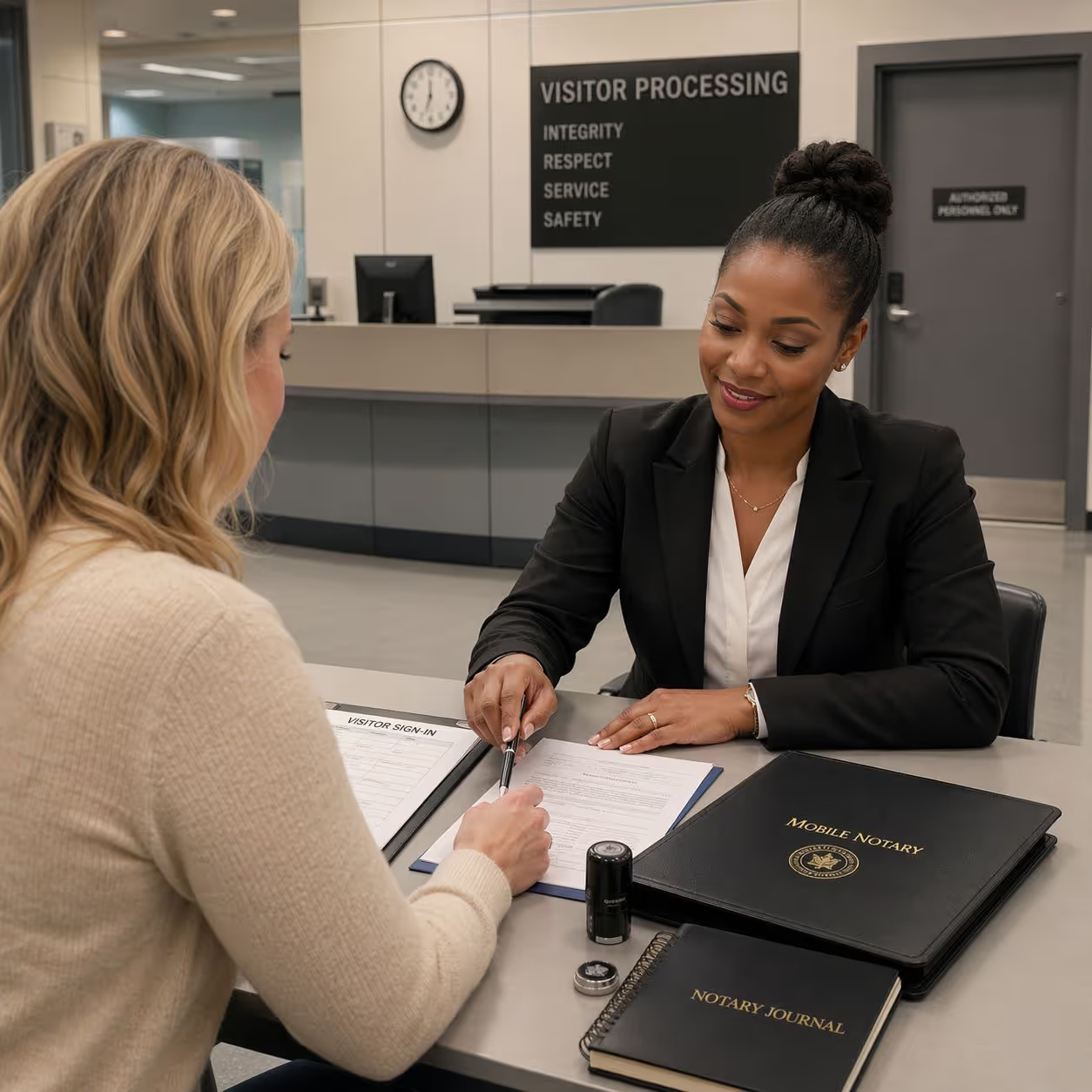
At each appointment, the notary follows Nevada law and facility procedures to verify the incarcerated signer’s identity, complete the appropriate notarial certificate, and return the notarized power of attorney or authorization letter to the person coordinating vehicle release.
Before scheduling, families and attorneys should confirm which form the tow yard, law enforcement agency, or DMV office requires, how the facility will allow document signing, and what information and case details must appear on the vehicle release paperwork.
Vehicle Release Context
When Incarcerated Owners Need Vehicle Release Powers of Attorney or Authorization Letters
Vehicle release documents help representatives act for an owner who cannot personally appear at a tow yard or DMV office.
When a vehicle owner is incarcerated and a vehicle has been towed, impounded, or needs to be sold or transferred, a family member, attorney, or representative may need written authority to act on the owner’s behalf.
Tow yards and impound facilities often require proof of ownership, payment of fees, and in some cases a notarized vehicle power of attorney or authorization letter before they will release the vehicle to someone other than the registered owner.
DMV or lien processes may also require separate forms when title, lien, or registration changes are involved. The incarcerated owner’s vehicle release documents support these processes but do not replace agency requirements or facility policies.
Notary Role
Notary Role, Facility Rules and Legal Limits
The notary’s responsibilities are limited to lawful notarial acts on documents presented under detention-facility rules.
When an incarcerated owner signs a power of attorney or authorization letter, the notary verifies identity under Nevada law and facility procedures, ensures personal appearance as required, and completes the appropriate notarial certificate on the document.
The notary does not decide which form the facility, tow yard, DMV office, or lienholder requires, does not interpret the legal effect of the power of attorney or release letter, and does not guarantee that any organization will accept a particular document.
Detention facilities control visiting rules, including where and when documents can be signed. The notary works within those rules and coordinates with staff and representatives so that the incarcerated owner can sign in a way that respects both facility policies and notarial standards.
Related Documents
Documents Commonly Used Around Incarcerated Owner Vehicle Release
Vehicle release often involves more than one document and more than one organization.
Vehicle power of attorney
A vehicle power of attorney authorizes a named attorney-in-fact to act for the owner concerning specific vehicle matters. Agencies determine when forms such as VP-136 or similar records are appropriate.
Vehicle-release authorization letter
Some facilities or tow yards use written authorization letters that describe the vehicle, identify the authorized representative, and explain the purpose of the release.
Tow yard and impound records
Tow yards may record the vehicle’s plate, VIN, fees, and hold status. Their internal records and release procedures govern when a vehicle can be picked up.
Proof of ownership
Titles, registrations, DMV printouts, dealer reports of sale, or lender records may be requested to verify that the incarcerated owner is connected to the vehicle.
Law-enforcement or facility release documents
Additional forms may be required when a vehicle is held as evidence, is subject to a police hold, or is part of property-release procedures.
DMV and lien documents
Separate DMV forms and lien records may be necessary when ownership changes, liens are recorded or released, or registration needs to be updated.
Appointment Preparation
What Families, Attorneys and Representatives Should Prepare
Advance preparation helps incarcerated owners sign the right documents under facility rules.
Confirm facility procedures and visiting rules
Contact the detention facility to confirm visiting hours, professional-visit rules, required approvals, and where document signing can take place.
Identify the appropriate vehicle-release document
Determine whether the tow yard, law-enforcement agency, or DMV office expects a specific power of attorney form, a facility release letter, or another record.
Prepare the form before the visit
Complete the document with vehicle details, case information and representative details, leaving signature and notarial certificate sections for the appointment.
Gather information for the representative
Collect the representative’s contact information, relationship to the owner, and any documentation the tow yard or agency will expect from the representative.
Coordinate with attorneys or advisors
If attorneys or other advisers are involved, confirm that the proposed document reflects their instructions before the incarcerated owner signs.
Plan for follow-up at tow yards or agencies
Arrange how and when the representative will present notarized documents, proof of ownership, identification, and payments to the yard or agency after the jail appointment.
Mobile Jail and Tow-Yard Notary Process
How Incarcerated Owner Vehicle Release Notarization Works
A structured process supports both facility rules and vehicle-release procedures.
1
Confirm vehicle and facility requirements
Representatives and advisors confirm where the vehicle is located, which facility is holding the owner, and what documents each organization expects before release.
2
Prepare the power of attorney or authorization letter
The appropriate vehicle-release document is drafted with vehicle details, case or reference numbers, and representative information, leaving signature and notarial certificate sections blank.
3
Coordinate the jail notarization appointment
A mobile notary appointment is scheduled during permitted visiting times, following facility instructions about professional visits and document handling.
4
Verify identity and sign the document
At the facility, the notary verifies the incarcerated owner’s identity under applicable rules, the owner signs the document as described in the notarial certificate, and any required oaths or affirmations are administered.
5
Complete the notarial certificate
The notary completes and signs the certificate, records relevant details, applies the official seal, and returns the notarized document to the representative or attorney.
6
Use the document in vehicle-release or related processes
The representative presents the notarized document, along with identification and any required proof of ownership or payment, to tow yards, agencies, or DMV offices according to their procedures.
Tow-Yard, Law-Enforcement & DMV Considerations
How Tow-Yard, Law-Enforcement and DMV Rules Interact with Incarcerated Owner Vehicle Release
Vehicle release documents operate inside overlapping legal and operational frameworks.
Tow yards often have detailed policies for vehicle release, including identification, fee payment, proof of ownership, and release forms. Law-enforcement agencies may impose holds or evidence requirements that affect timing and eligibility for release.
DMV records and lien documents govern how ownership and registration are recorded. Even with a notarized power of attorney or authorization letter, agencies may require specific forms, signatures, or filings to update their records.
Representatives should view vehicle-release documents as one part of a larger set of obligations, coordinating with facility staff, yard operators, attorneys, and agency personnel to ensure each requirement is addressed.
Service Questions
Incarcerated Owner Vehicle Release Questions
These questions address how notarization supports, but does not replace, facility and agency procedures.
Does notarizing a power of attorney or authorization letter guarantee that the vehicle will be released?
No. Vehicle release decisions depend on facility, tow yard, law-enforcement, lienholder, and DMV rules. A notarized document supports those decisions but does not guarantee release.
Who decides which vehicle-release form the incarcerated owner should sign?
Facilities, agencies, attorneys, and responsible officials decide which form is appropriate. The notary cannot select or recommend legal documents.
Can the notary explain what the power of attorney or authorization letter does?
The notary may confirm general notarial information but cannot interpret legal rights, obligations, or consequences. Legal questions must go to attorneys or advisers.
What identification does an incarcerated owner need for notarization?
Facilities and Nevada law determine acceptable identification for incarcerated signers. The notary follows those rules, including any approved alternatives, when verifying identity.
How does this service relate to other vehicle notarization services?
Incarcerated owner vehicle release notarization focuses on documents signed in detention facilities. Other services address non-owner release, hold harmless agreements, DMV forms, and general vehicle transfers.
Can a family member or representative use these documents for title or registration changes?
Vehicle-release documents may be part of title or registration processes, but DMV and lienholders decide which forms and steps are required for those changes.
Need professional photos for your property listing?
.avif)

.avif)