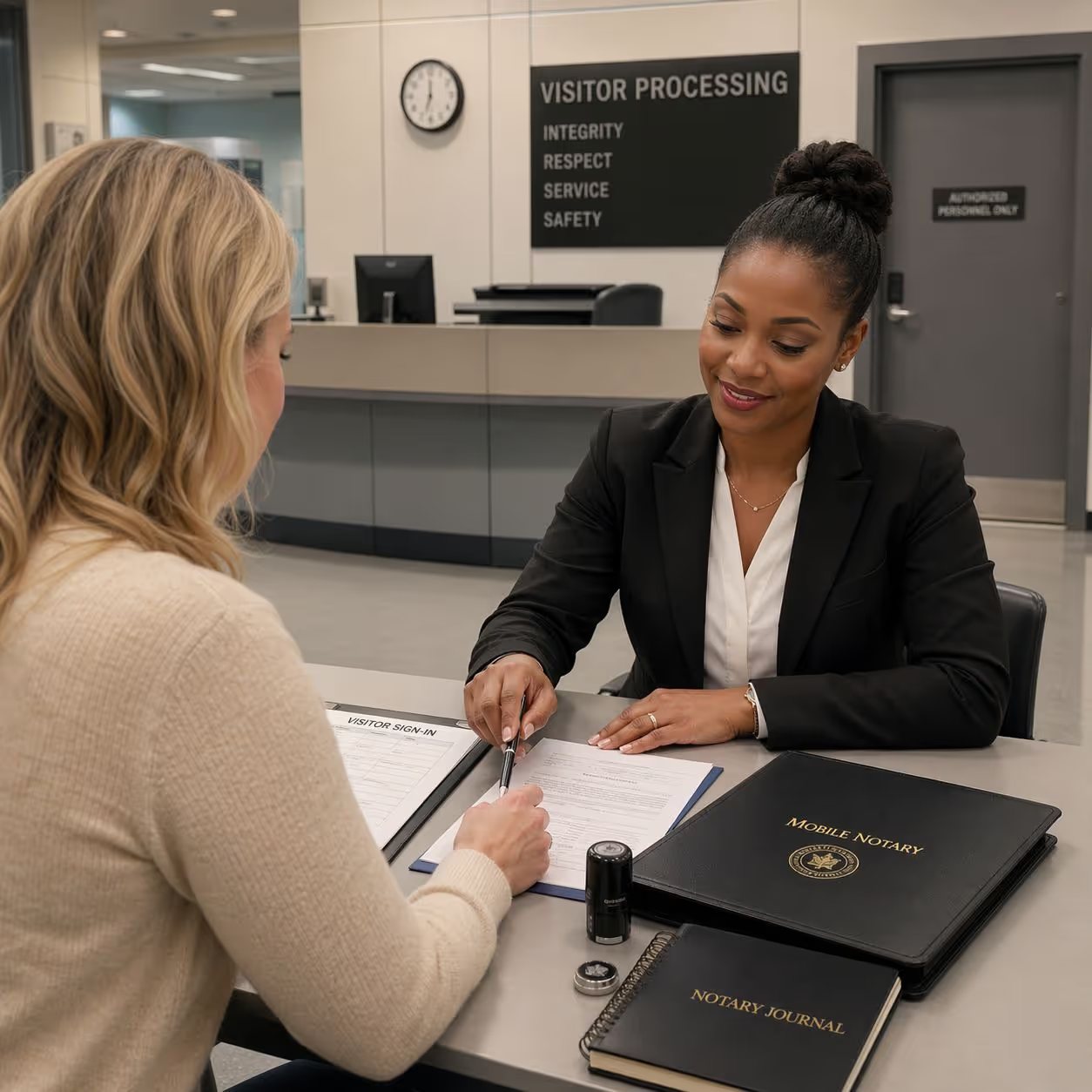
Hospice Notarization Service

Hospice Notarization Service

When a loved one is in hospice care, important medical and estate documents may need to be signed quickly and carefully while the signer can still understand and communicate their wishes.

Lake Mead Mobile Notary provides compassionate mobile notarization for medical powers of attorney, advance healthcare directives, HIPAA authorizations, medical records releases, and certain will or estate-related documents in hospice settings.

Appointments are coordinated with families and care teams so the signer’s identity can be verified, capacity and willingness respected, and lawful notarial acts performed at the bedside when appropriate.

Important Limits on Hospice Notarization

A notary public may only proceed when the signer appears mentally capable of understanding the document, is able to communicate clearly, and can be properly identified under Nevada requirements.

Lake Mead Mobile Notary does not provide legal or medical advice, does not decide which documents are required, and cannot guarantee that any notarized document will be accepted by a court, hospital, insurer, or government agency. Questions about which forms to use or the legal effect of those forms must be directed to an attorney, healthcare provider, or the institution requesting the paperwork.

Documents Commonly Notarized in Hospice Care

Hospice Notarization Service focuses on medical and estate documents that often arise during end-of-life planning and require notarized signatures under Nevada law or institutional policies.

  • Medical durable powers of attorney appointing a healthcare agent.
  • Advance healthcare directives and declarations that state end-of-life treatment preferences.
  • HIPAA authorizations and medical records release forms requested by healthcare providers or attorneys.
  • Certain estate planning documents, such as wills or trust-related documents, when prepared by an attorney and requiring notarized signatures.
  • Other documents requested by hospitals, hospice providers, or legal counsel that specifically call for a notarial act.

Each document type may have its own statutory or institutional requirements for witnesses, notarization, or execution. Those requirements are determined by Nevada law and the requesting institution, not by the notary.

Capacity, Communication, and Identification Requirements

Before any hospice notarization begins, the signer must appear mentally capable of understanding the nature of the document and the consequences of signing it.

The signer must be able to communicate their intent directly to the notary, whether verbally, in writing, or with clear signals, and must be free from coercion or undue pressure at the time of signing.

Identification is typically provided through valid government-issued photo ID. In limited circumstances allowed under Nevada law, personal knowledge or other acceptable identification methods may be used, but only when they meet current statutory and regulatory standards.

How Hospice Notarization Appointments Work

The hospice appointment process is designed to protect the signer while providing families and care teams with clear steps.

  1. Discuss documents and timing

    Family members or care teams identify which documents need notarization, who will sign, and whether the signer currently appears alert and able to communicate.

  2. Prepare documents and instructions

    Documents should be complete but unsigned, following any instructions given by attorneys, healthcare providers, or official forms. Relevant identification and any written guidance should be ready before the notary arrives.

  3. Bedside assessment and notarization

    At the appointment, the notary verifies the signer’s identity, observes their ability to understand and communicate, and performs each lawful notarial act only if these requirements are met.

  4. Return documents for use

    Completed documents are returned to the family, attorney, or care team for filing, recordkeeping, or submission to the appropriate institutions, according to those institutions’ instructions.

What Families and Care Teams Should Prepare

Preparing for a hospice notarization helps reduce stress and supports a calm, respectful appointment.

  • Completed but unsigned medical and estate documents, including any advance directives or healthcare powers of attorney.
  • Valid, unexpired government-issued photo ID for the signer and any additional signers.
  • Written instructions or forms provided by attorneys, healthcare providers, or institutions requesting the documents.
  • A quiet space and a time window that allows the signer to focus without unnecessary interruptions.

Professional Boundaries and Nevada Legal Framework

Lake Mead Mobile Notary’s role in hospice settings is limited to verifying identity, assessing willingness and apparent understanding, and performing lawful notarial acts.

We do not draft documents, interpret legal or medical provisions, select which forms should be used, calculate deadlines, or advise on whether a document will be effective for a particular legal or medical purpose.

We also cannot guarantee acceptance of any document by courts, hospitals, insurers, or government agencies. Those decisions depend on statutes, regulations, and institutional policies, and should be confirmed with attorneys, healthcare providers, or the requesting institution.

Common Hospice Notarization Questions

What if the patient is asleep, sedated, or unable to speak?

If the signer cannot demonstrate understanding of the document or communicate intent directly to the notary, the notarization must be postponed or declined.

Families should speak with medical providers and attorneys about alternative timing or options when capacity is limited.

Who can request a hospice notarization?

Family members, healthcare agents, attorneys, or care teams may coordinate an appointment, but the notarization itself depends on the signer’s condition and ability to meet legal requirements.

The notary cannot proceed solely on a third party’s request if the signer does not personally appear or cannot be properly identified.

Can you tell us which hospice or estate documents are required?

No. Lake Mead Mobile Notary cannot advise on which documents should be used or whether existing documents are sufficient.

We recommend working with an attorney or using official forms for Nevada advance directives and estate planning, then scheduling notarization once the documents are prepared.

Does notarizing a hospice document guarantee it will be accepted?

No. Notarization confirms identity and execution of the document but does not guarantee acceptance by any court, hospital, insurer, or government agency.

Acceptance decisions depend on applicable laws, institutional policies, and the content of the document itself.

Need professional photos for your property listing?

Real Estate PhotographyProperty Video & Walkthroughs

Need professional documentation services?

Professional Photography ServicesAdmin Support for Realtors

Need branding for your new business?

Realtor Headshots & BrandingReal Estate Websites & SEO

related services

Featured Locations