Advance care planning notarization

Medical Durable Power of Attorney Notarization

Medical durable power of attorney notarization helps a signer complete a document that names a trusted person to make health care decisions if the signer later becomes unable to communicate or decide for themselves. In Nevada, this document is often part of a broader advance directive, but the medical power of attorney section has its own execution rules and should not be confused with every other health-care form.

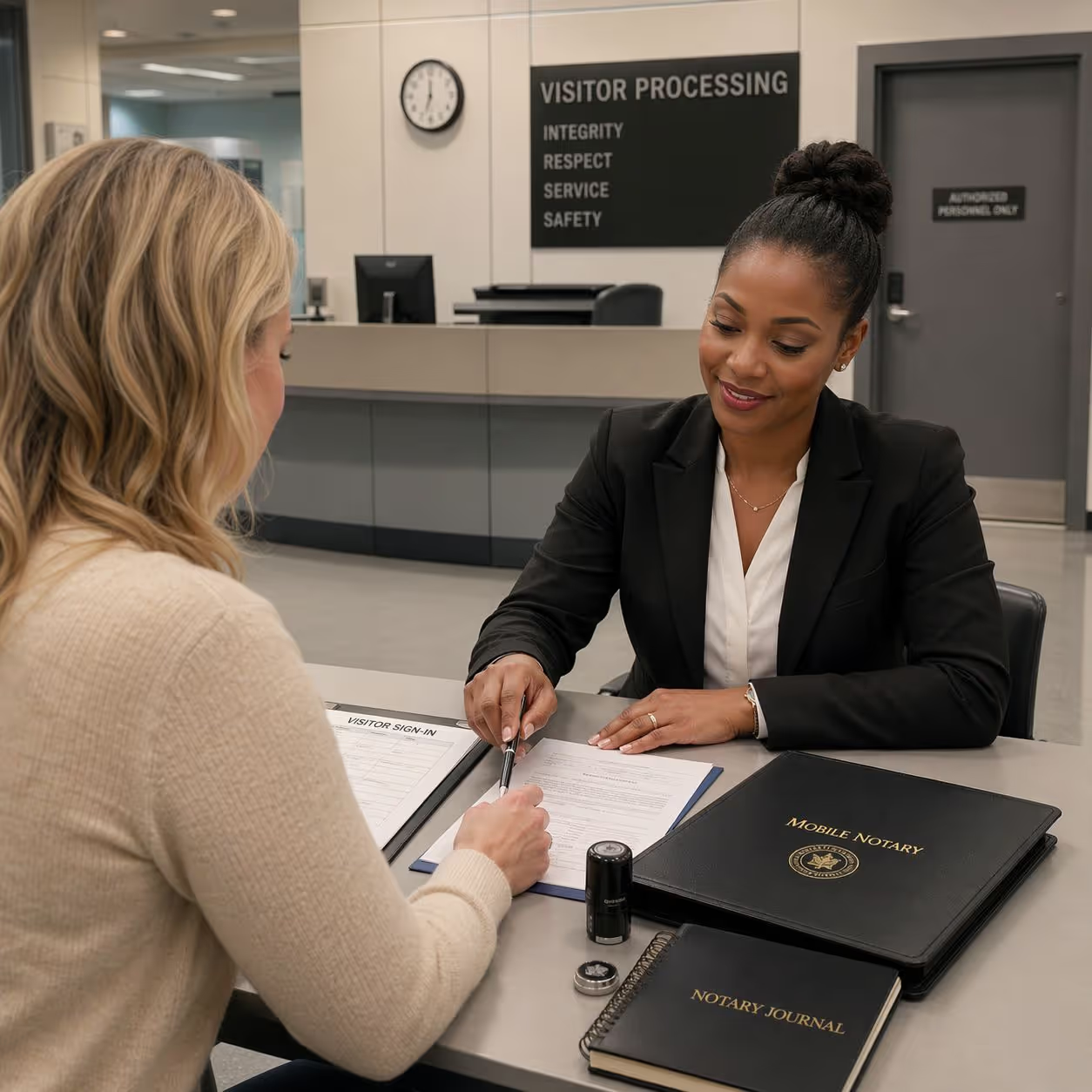
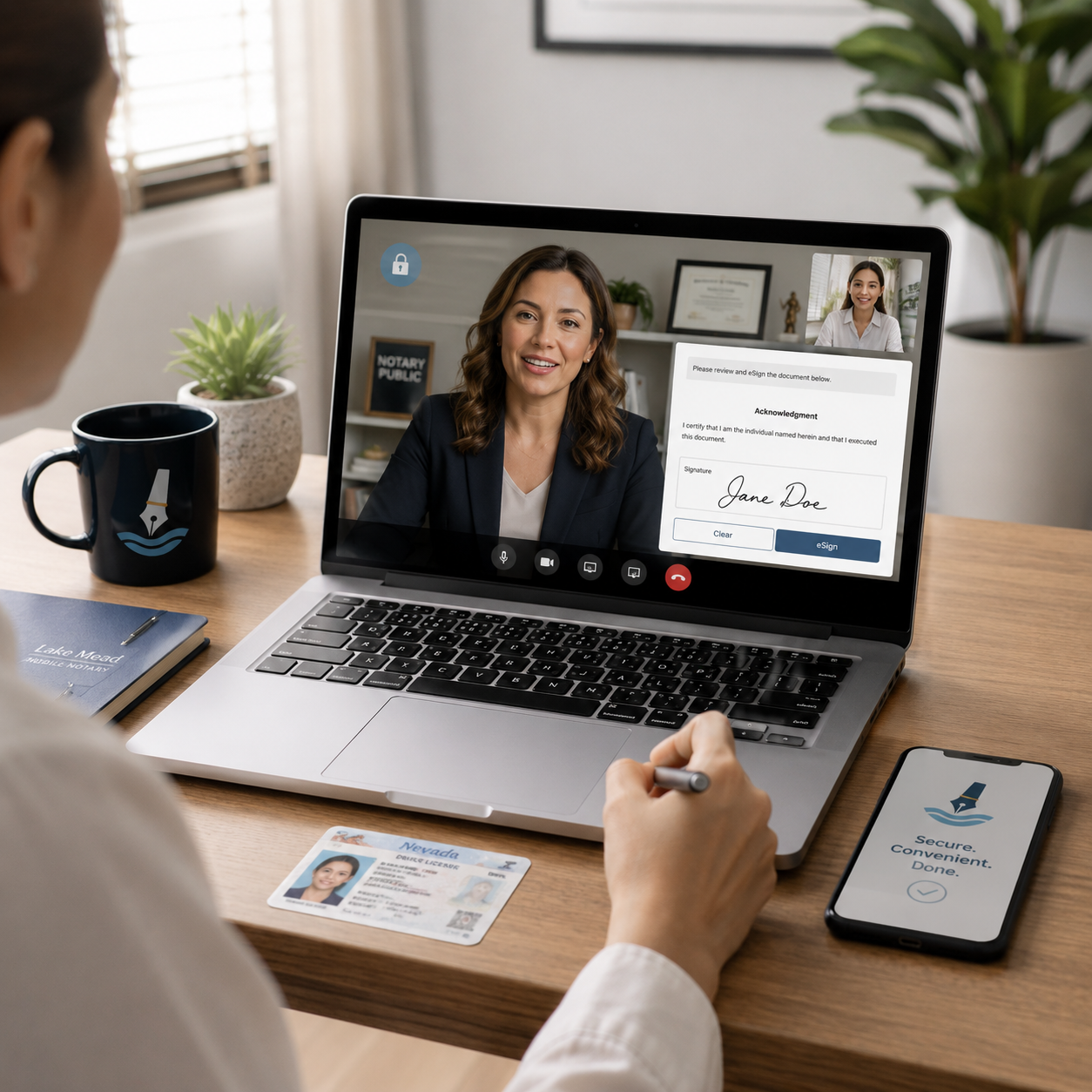
Lake Mead Mobile Notary provides mobile notarization for medical POA and health care agent documents in homes, hospitals, hospice settings, care facilities, and other approved meeting locations across Southern Nevada. This service is commonly used by seniors, patients, adult children helping parents, and families preparing for surgery, illness, hospitalization, or long-term care planning.

The notary’s role is to verify identity, confirm willingness, and perform the requested lawful notarial act when the signer is aware, able to communicate intent, and ready to sign. The notary does not choose the form, explain medical consequences, or decide whether a different advance-directive document would be more appropriate.

Important Limits on Medical POA Notarization

Nevada materials distinguish the medical power of attorney from other advance-directive components, so witness and notary requirements can differ depending on which form or section is being signed. Families should confirm the exact document instructions before the appointment.

Lake Mead Mobile Notary does not provide legal or medical advice, does not decide which advance-directive form should be used, and cannot proceed if the signer is unwilling, unable to communicate clearly, or cannot be properly identified.

What a medical durable power of attorney does

A medical durable power of attorney allows a person to name a trusted health care agent who can make medical decisions if the principal later cannot speak or decide for themselves.

This document is often part of broader advance care planning. In practical terms, it helps identify who should speak with doctors, review treatment choices, and make health care decisions when the principal is incapacitated or otherwise unable to direct their own care.

On this page, the focus is the notarization of the medical power of attorney itself. That keeps the service distinct from broader living-will and health-directive pages, which may involve additional instructions about end-of-life treatment choices or related medical forms.

When families usually need this document

Medical POA notarization is often requested during planning moments when families want decision-making authority clearly documented before a crisis develops.

  • Before surgery or hospitalization

    A signer may want a trusted agent named before a procedure, admission, or treatment period in case communication becomes limited afterward.

  • During serious illness

    Families often seek notarization when a diagnosis or sudden medical event makes future decision-making authority more urgent.

  • While caring for aging parents

    Adult children may help parents complete a medical POA while the parent still clearly understands the document and can choose an agent intentionally.

  • In hospital or hospice settings

    Bedside signing may be needed when the principal cannot easily travel and wants to complete the document in a facility or care environment.

  • As part of a full advance directive

    Some signers complete a medical POA together with a living will or other health-care instructions, even though the different parts of the packet may follow different execution rules.

  • For proactive estate and care planning

    Others complete the document well before any medical emergency so family authority is already documented if it is ever needed.

Nevada signing and notarization rules

This is one of the most important parts of the page because many families assume every advance-directive form in Nevada follows the same execution process.

Nevada’s medical power of attorney materials allow the principal to use notarization for the medical POA section, or to use qualified witnesses instead of notarization in some circumstances. That means the exact signing method should be confirmed from the form instructions before the appointment.

By contrast, related documents such as a living-will declaration may have different witness and notarial requirements. For that reason, a family should not assume that a witness rule for one health-care form automatically controls every other document in the packet.

The notary can complete the requested lawful notarial act when the signer is ready, willing, and properly identified, but the notary does not determine which form is legally sufficient or whether witnesses are required for a different section of the advance directive.

What to prepare for the appointment

A well-prepared medical POA appointment is usually calmer, faster, and less likely to be delayed by preventable document problems.

  • The completed medical POA form

    Bring the document filled out as completely as possible, but leave signatures for the proper time and place required by the form instructions.

  • Valid identification for the principal

    The signer should have acceptable identification ready so the notary can verify identity under Nevada requirements.

  • Any witness instructions from the form

    If the document packet calls for witnesses instead of notarization, or for witnesses in another section, those instructions should be reviewed in advance.

  • Attorney or facility guidance

    If a lawyer, hospital department, hospice team, or care facility provided instructions, keep them with the paperwork so the signing process follows the intended format.

  • A signer who can communicate clearly

    The principal must be able to understand the document and express willingness at the time of signing. The notary cannot proceed if the signer appears confused, coerced, or unable to communicate intent.

  • A quiet setting when possible

    Whether the appointment is at home, in a hospital, or in a care facility, fewer distractions help the signer focus and reduce confusion during a sensitive planning conversation.

Mobile signing in hospitals, hospice, and home settings

Medical durable power of attorney notarization is often requested in settings where the signer’s health, mobility, or timing makes travel difficult.

This service may be arranged at home for proactive planning, at a hospital when treatment or discharge decisions are approaching, or in hospice and care settings when families are trying to complete medical decision-planning documents without moving the signer off site. Those real-world settings are why this page is closely related to hospital notarization and hospice notarization, even though it remains a document-specific service page.

Facility staff, attorneys, and receiving institutions may all have their own preferences about where a signing should occur, whether witnesses are needed elsewhere in the packet, and how the completed paperwork should be delivered afterward. The notary performs the notarization itself, while the family or requesting institution should confirm any additional document-handling requirements in advance.

Medical POA questions

Does a Nevada medical durable power of attorney have to be notarized?

Not always. Nevada materials allow notarization for the medical power of attorney section, but some forms also allow qualified witnesses instead. The exact execution method should be confirmed from the form instructions being used.

Is a medical POA the same as a living will?

No. They are related health-care planning documents, but they serve different functions and may follow different signing requirements. A medical POA names an agent, while a living will generally gives treatment instructions.

Can the notary tell us which advance directive form we need?

No. The notary can perform the notarial act for a prepared document, but does not decide which form is appropriate or explain the legal or medical consequences of the signer’s choices.

Can this be notarized at a hospital or hospice bedside?

Often yes, provided the signer is alert enough to understand the document, can communicate intent, can be identified, and the facility permits the appointment logistics.

What if the signer is too ill or confused to communicate?

The notarization cannot go forward unless the signer appears aware, willing, and able to communicate their intent at the time of the appointment.

Need professional photos for your property listing?

Real Estate PhotographyProperty Video & Walkthroughs

Need professional documentation services?

Professional Photography ServicesAdmin Support for Realtors

Need branding for your new business?

Realtor Headshots & BrandingReal Estate Websites & SEO

related services

Featured Locations