.avif)
Brand Partnerships, Events & Endorsements
Lake Mead Mobile Notary provides mobile notarization for prepared sponsorship, endorsement, naming-rights, event, venue, sports, nonprofit, media, and promotional partnership documents when the agreement, sponsor, sponsored property, agency, counsel, lender, insurer, government recipient, or foreign party requires a lawful Nevada notarial act.
Common matters include corporate and event sponsorship agreements, title and presenting sponsorships, athlete and influencer endorsements, college-athlete NIL agreements, venue and arena naming rights, team and league partnerships, conference and exhibition sponsorships, nonprofit sponsorships, co-marketing agreements, product-placement arrangements, in-kind sponsorships, amendments, releases, and authority affidavits.
Most sponsorship contracts do not automatically require notarization. Confirm the final agreement, requested certificate, authorized signers, deliverables, brand and likeness rights, counterpart or original requirements, disclosure obligations, venue or event conditions, and any foreign-use formalities before the appointment.
Review the Execution Clause
The size of the payment, prominence of the event, celebrity status of the endorser, or importance of the campaign does not by itself create a notarial requirement. Review the final signature page, acknowledgment or jurat, recipient instructions, authority documents, and foreign-use rules.
Many negotiated sponsorship agreements are executed through authorized signatures or an electronic-signature platform without a notarial certificate. Follow the final contract and the parties’ written closing instructions.
The agreement may be signed without notarization, while a separate likeness consent, authority affidavit, guardian document, release, or foreign-use certificate may require a notarial act. The parties and counsel determine the correct execution package.
A NIL deal may cover social posts, appearances, endorsements, autographs, camps, or promotions. The athlete, sponsor, school compliance personnel, agent, and counsel should confirm current reporting, activity, compensation, and institutional requirements.
Long-term naming-rights and venue partnerships may use corporate resolutions, incumbency certificates, lender consents, owner approvals, or public-agency records that have execution requirements separate from the primary sponsorship agreement.
The sponsorship contract may distinguish simple sponsor acknowledgment from advertising, exclusive-provider rights, tickets, hospitality, goods, services, or other return benefits. Tax classification and charitable substantiation are professional matters, not notarial determinations.
An affidavit concerning authority, delivery, attendance, media metrics, exclusivity, ownership, use of funds, insurance, or compliance may require a jurat. The affiant—not the notary—is responsible for the truth of the statement.
A foreign party, bank, federation, ministry, venue, registry, or court may require wet ink, notarization, apostille, authentication, legalization, translation, witnesses, or prescribed certificate wording. Confirm the destination requirements before signing.
The signer must obtain direction from the sponsor, sponsored property, agency, event producer, venue, athlete representative, counsel, or receiving authority. The notary cannot select an acknowledgment or jurat merely to make the deal appear more formal.
Partnership and Activation Documents
These agreements appear across sports, entertainment, conventions, hospitality, nonprofit fundraising, media, and brand marketing. Inclusion here does not mean every version requires notarization.
Contracts connecting a business with an event, organization, campaign, program, property, team, venue, publication, or community initiative in exchange for defined recognition and benefits.
Agreements granting title, presenting, supporting, official-partner, or category-sponsor status for a concert, festival, convention, conference, tournament, gala, exhibition, or promotional event.
Long-term or event-specific rights involving an arena, theater, room, stage, lounge, series, tournament, program, award, hospitality area, or other branded property.
Agreements covering team assets, uniforms, signage, broadcasts, digital media, appearances, endorsements, clinics, camps, hospitality, tickets, category rights, and promotional content.
Contracts for social posts, videos, live streams, appearances, product use, testimonials, content production, affiliate activity, licensing of name or likeness, usage periods, and campaign disclosures.
Deals compensating a student-athlete for defined use of name, image, or likeness through advertising, appearances, social content, autograph sessions, camps, clinics, or other legitimate promotional services.
Agreements covering exhibitor packages, badges, sessions, stages, hospitality, signage, lead retrieval, digital listings, attendee communications, speaking opportunities, and sponsored content.
Agreements involving sponsor recognition, acknowledgments, event benefits, advertising inventory, exclusive-provider arrangements, tickets, tables, goods, services, or in-kind support.
Partnerships for joint campaigns, branded experiences, demonstrations, sampling, product placement, content integrations, pop-ups, contests, promotions, digital activation, and shared media.
Documents revising inventory or dates, adding markets or talent, approving substitutions, releasing claims, confirming fulfillment, ending exclusivity, settling payment disputes, or terminating the relationship.
Campaign Rights and Responsibilities
The contract should identify exactly what each party is providing and who is responsible for approvals, disclosures, permits, insurance, content, measurement, and legal compliance.
The agreement may address cash fees, products, services, travel, lodging, venue support, media inventory, equipment, production assistance, discounts, reimbursements, deposits, installment dates, taxes, and late-payment consequences.
Define signage, logo placement, mentions, posts, appearances, tickets, hospitality, booths, content, media, speaking rights, data, product displays, sampling, lead generation, and other promised benefits.
The parties should specify which names, logos, marks, slogans, artwork, footage, photographs, and brand standards may be used, by whom, in which media, for what period, and subject to what approval process.
Athlete, entertainer, speaker, creator, and executive sponsorships may include permission to use a person’s name, voice, signature, photograph, likeness, biography, performance, or approved content.
Paid or incentivized endorsements must be truthful, and unexpected material connections between an endorser and brand may require clear and conspicuous disclosure. The parties should allocate content approval, monitoring, and correction responsibilities.
The contract may identify exclusive sponsor status, protected product categories, competitor restrictions, carve-outs, pre-existing commitments, geographic limits, media limits, and remedies for conflicting partnerships.
Activation may depend on venue policies, event permits, league or federation rules, school or conference requirements, broadcast restrictions, social-platform policies, security procedures, alcohol or gaming rules, and government approvals.
For tax-exempt organizations, sponsor acknowledgment can receive different federal tax treatment from advertising or substantial return benefits. Exclusive-provider rights, promotional language, tickets, goods, services, and other benefits should be reviewed by qualified tax advisers.
The agreement may define attendance, impressions, broadcasts, views, engagement, leads, sales, valuation reports, proof of performance, replacement inventory, credits, refunds, extensions, or make-good benefits.
Address postponement, cancellation, venue change, talent unavailability, weather, public-health restrictions, reputational events, prohibited conduct, nonperformance, cure periods, refund rights, and survival of brand-use obligations.
Parties and Representative Capacity
The public face of a campaign is not always the person authorized to bind the sponsor, rights holder, venue, team, nonprofit, agency, or talent entity.
An officer, director, LLC member or manager, partner, marketing executive, procurement representative, or other authorized signer may execute for the sponsoring business.
A promoter, organizer, production company, association, nonprofit, venue operator, league, team, conference, or media property may designate its own authorized representative.
The individual may sign personally, through a loan-out company or business entity, or with an authorized agent, depending on the agreement and ownership of the relevant name, image, likeness, content, or endorsement rights.
The athlete signs the NIL agreement, while an agent, attorney, parent, business manager, collective, sponsor, or school compliance contact may participate in preparation, reporting, or review according to current requirements.
A venue owner, operator, landlord, public authority, property manager, lender, or concessionaire may have separate approval or execution authority over naming, signage, activation, access, and exclusivity.
A marketing agency, talent agency, sponsorship broker, sales representative, or event agency may negotiate or administer the deal but should sign for a principal only when granted authority.
An executive director, officer, board-authorized representative, event chair, association executive, or fiscal sponsor may sign subject to the organization’s governance and approval requirements.
A person signing under a power of attorney, board resolution, delegation, incumbency certificate, or agency authority should bring that document and use the capacity wording required by the recipient.
Multi-brand campaigns, joint ventures, co-promoted events, shared venues, league-and-team rights, or multiple talent participants may require several separately authorized signatures or counterparts.
A minor athlete, performer, creator, or participant may require a parent, guardian, court approval, trust arrangement, or jurisdiction-specific procedure. The parties should obtain legal direction before execution.
Appointment Preparation
Bring the correct version with all exhibits, activation schedules, rate cards, inventory lists, media plans, brand guidelines, event dates, likeness permissions, insurance requirements, and signature pages.
Confirm whether the document requires an acknowledgment, jurat, sworn affidavit, witness, authority certification, or no notarization. Provide prescribed certificate wording when required.
Each person whose signature is being notarized must personally appear for an in-person appointment, establish identity through a method permitted by Nevada law, and sign or acknowledge as required.
Verify the sponsor, event, venue, organization, team, athlete, agency, nonprofit, talent entity, and signer names exactly as they should appear, together with representative titles.
Bring resolutions, delegations, powers of attorney, agency agreements, lender consents, venue approvals, league or school instructions, or other authority records required by the transaction.
Confirm the campaign, event, property, team, league, venue, athlete, product category, sponsorship level, territory, term, activation dates, deliverables, and agreement dates.
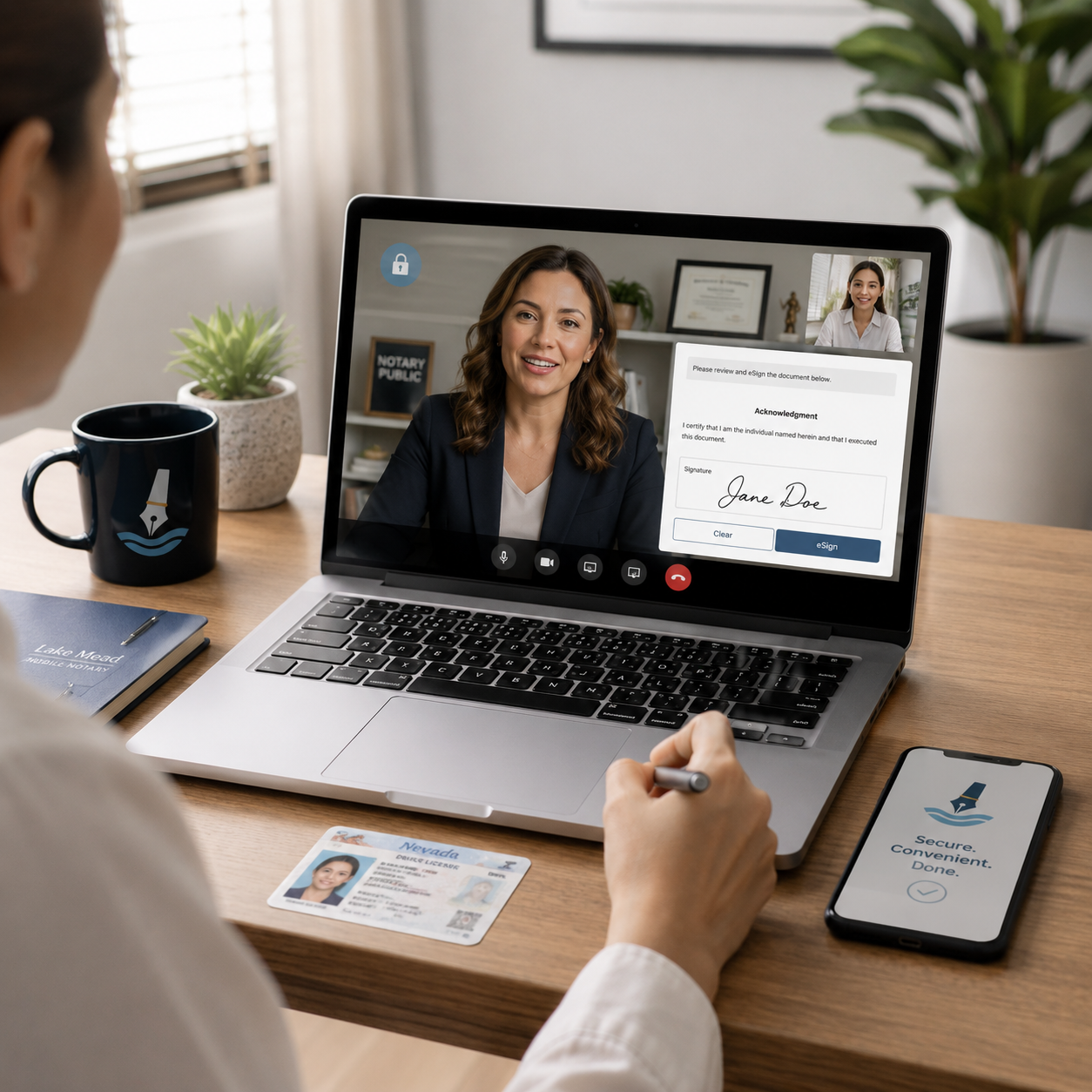
Determine whether the parties require original paper signatures, electronic signatures, notarized paper certificates, electronic notarization, separate counterparts, or consolidated signature pages.
Confirm the number of original agreements, notarized signature pages, sponsor and rights-holder copies, insurer or lender copies, government copies, apostille copies, and required attachments.
Provide the destination country, receiving organization, language, translation instructions, apostille or authentication path, witness rules, and any consular requirements before signing.
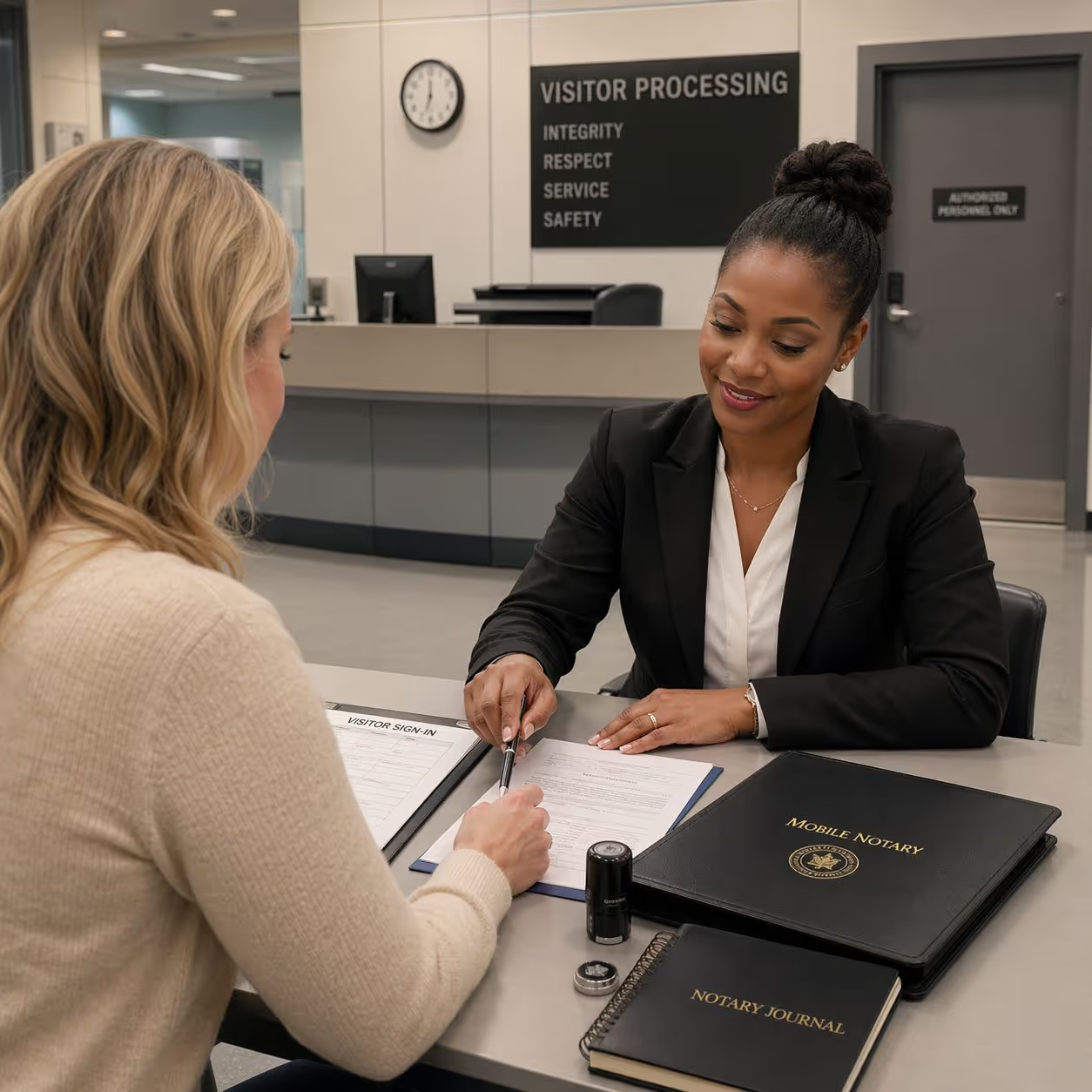
Arrange a secure table and a reachable attorney, agency representative, sponsorship manager, venue contact, team representative, nonprofit executive, or contract administrator who can resolve execution questions.
Mobile Appointment
Provide the sponsorship type, parties, campaign or event, requested notarial act, signer capacities, deadline, meeting location, foreign destination when applicable, and number of originals or counterparts.
The parties or counsel confirm the approved contract, exhibits, deliverable schedules, likeness or brand permissions, authorized signers, wet-ink or electronic format, and return instructions.
Each required signer personally appears, establishes identity, demonstrates willingness, and either acknowledges an existing signature or signs after taking an oath or affirmation when a jurat is required.
The notary completes the venue, date, signer name, representative capacity when applicable, signature, commission information, and seal, then checks the notarial certificate for missing entries.
The sponsor, rights holder, agency, venue, athlete representative, nonprofit, counsel, or contract administrator handles countersignatures, payment, approvals, permits, insurance, activation, disclosures, apostille or authentication, and retention.
Common Questions
No. Most corporate, event, team, venue, endorsement, nonprofit, and co-marketing sponsorship agreements are executed without a notarial certificate. Use notarization only when the final contract or responsible recipient requires it.
Generally, electronic records and signatures can have legal effect, subject to the parties’ agreement and applicable requirements. Electronic signing is not the same as electronic notarization when a separate notarial act is required.
It depends on the requested act. An acknowledgment may cover a signature made earlier, while a jurat requires the signer to take an oath or affirmation and sign in the notary’s presence.
No. The notary does not verify signage, posts, appearances, tickets, hospitality, media, attendance, impressions, exclusivity, product placement, event completion, or campaign performance.
Yes, when the prepared agreement or supporting document contains a lawful notarial act. The parties remain responsible for endorsement disclosures, likeness rights, agency authority, league or school rules, prohibited categories, deliverables, and compensation.
A paid, gifted, employment, family, or other material connection that consumers would not expect may require clear and conspicuous disclosure. Brands, agencies, and endorsers should follow current FTC guidance and obtain legal review for the campaign.
Yes, when the agreement or supporting document requires notarization. Current NCAA, school, conference, state, reporting, compensation, and activity rules should be confirmed before signing.
No. The written consent, license, release, representation of authority, and applicable law determine the permitted use. The notary does not grant publicity rights or decide whether the signer owns or controls them.
No. Trademark and brand-use rights must come from the owner or authorized licensor and remain subject to the agreement, brand standards, approvals, territory, media, term, and applicable law.
Not necessarily. Recognition, advertising, exclusive-provider rights, tickets, hospitality, goods, services, and other return benefits can affect federal tax treatment and charitable substantiation. A qualified tax professional should review the arrangement.
Potentially. Many agreements permit counterparts, and notarized signers may appear separately when the document and recipient allow it. Confirm whether separate originals, electronic counterparts, or consolidated pages are accepted.
No. Effectiveness may depend on countersignature, payment, approvals, insurance, permits, event occurrence, talent participation, delivery of assets, venue consent, or another contractual condition.
Potentially. The foreign recipient may require wet ink, prescribed certificate wording, apostille, authentication, consular legalization, translation, or witnesses. Obtain written destination instructions before execution.
No. The notary does not interpret compensation, deliverables, media rights, category protection, publicity rights, FTC disclosures, NIL rules, tax treatment, insurance, force majeure, morality clauses, refunds, or termination provisions.
Yes, when the property permits access and provides an appropriate meeting area. Parking, credentials, security screening, event access, backstage or restricted-area permissions, and confidentiality requirements must be arranged before arrival.













.avif)


