.avif)
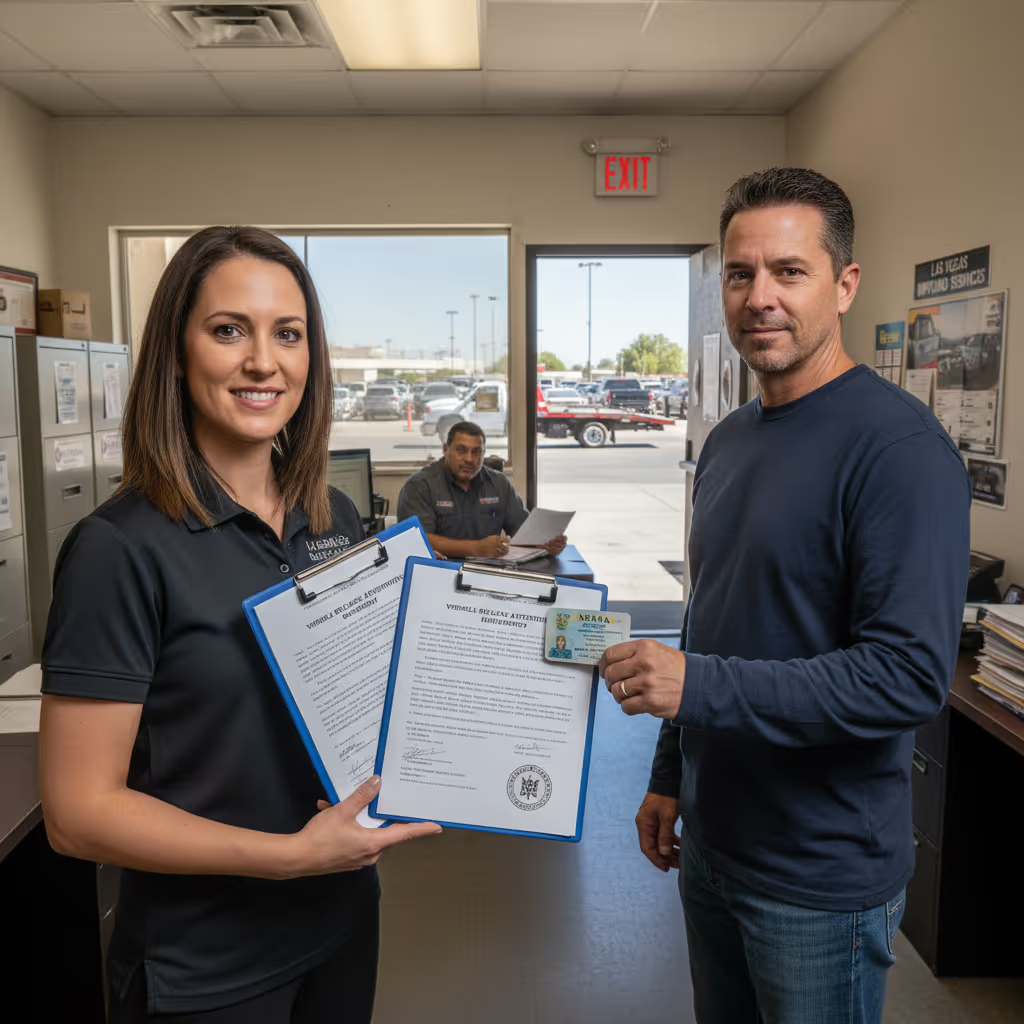
Nevada DMV Form Notice
Lake Mead Mobile Notary can notarize a prepared DMV or vehicle-related document. We cannot decide which form your transaction requires, determine vehicle ownership or signing authority, or tell a tow yard, lienholder, law-enforcement agency, or the Nevada DMV what it must accept.
For questions about a title, registration, lien, duplicate title, ownership transfer, vehicle record, or Nevada DMV form, contact the Nevada Department of Motor Vehicles before scheduling a notary.
For a tow-yard or impound release, confirm the exact requirements with the tow yard, releasing agency, lienholder, or police department . Ask which document, signer, identification, wording, and original-copy format they will accept.
Once you know the exact document, required signer, and requested notarial act, contact Lake Mead Mobile Notary for the appropriate appointment. Tow-yard authorization letters are handled by phone only after the releasing facility confirms what it requires.
Lake Mead Mobile Notary is not the Nevada DMV and is not a DMV representative. We provide services through notaries commissioned by the Nevada Secretary of State, but we are not a government agency, tow yard, law-enforcement agency, lienholder, title company, or law firm. We do not select DMV forms, determine ownership, establish signing authority, interpret agency requirements, or guarantee title issuance, registration, lien resolution, removal of a police or administrative hold, or vehicle release. Notarization verifies the requested signature or sworn act; it does not make the underlying vehicle transaction acceptable.
Releasing an impounded vehicle from Las Vegas area tow yards requires notarized authorization letters, vehicle power of attorney forms, and proper DMV documentation to retrieve vehicles from facilities like SNAP Towing Henderson, Titan Towing, Ewing Brothers, and AA Action Towing. Lake Mead Mobile Notary provides same-day on-site service at all Clark County tow yards, eliminating delays caused by searching for notaries during urgent impound situations. Nevada tow yards require non-owner release authorization when anyone other than the registered owner retrieves the vehicle, making mobile notary coordination essential for family members, dealerships, insurance adjusters, and recovery agents. Common tow yard scenarios include LVMPD police impounds requiring proper authorization documentation, private property tows needing immediate release coordination, and auction purchases requiring bill of sale and title transfer notarization at facilities throughout Las Vegas Valley. Mobile notary service saves an average of three to four hours compared to leaving the tow yard to locate notary services and returning with executed documents, preventing additional daily storage fees averaging eighty to one hundred fifty dollars per day across Henderson and Las Vegas impound facilities.
Need an impound release today? We meet you on-site at Las Vegas tow yards to notarize non-owner release authorizations, VP-136 vehicle POA, and buyer paperwork—so you can pay fees and drive out the same visit. Same-day appointments available 7 days/week.
Avoid extra storage charges and second trips. Book at lakemeadmobilenotary.com/book or call (702) 748-7444.
Tow yards are responsible for releasing vehicles to the correct party. A notarized authorization or vehicle power of attorney proves identity, captures a permanent record in a notary journal, and reduces disputes about who was permitted to retrieve the car. Most facilities also follow insurer and police-contract procedures that require notarized documents when a non-owner picks up the vehicle. Typical scenarios include:
Call the facility to confirm the exact lot address, case/reference number, daily storage fees, what documents they require, and office hours. If your vehicle is under a police hold, ask what release paperwork is needed before arrival.
If the registered owner will appear in person, bring valid government-issued photo ID. If a non-owner (family member, agent, adjuster, dealer employee) will pick up the vehicle, most yards require either a notarized authorization letter or a Nevada DMV VP-136 vehicle power of attorney.
We meet you at the facility—no extra trips across town. Call/Text (702) 748-7444 or book online. On-site notarization avoids losing time while storage fees add up.
You'll need government photo ID for all signers, the VIN, year/make/model, license plate, tow yard case number, and payment method for yard fees. For non-owner pickups, bring a copy of owner’s ID plus the notarized letter or VP-136.
We verify identity, review for completeness (VIN and parties), witness signatures, administer oaths when required, and complete Nevada-compliant notarial certificates. Standard releases take about 15–20 minutes.
Return to the cashier/office with your notarized paperwork to finalize payment and receive authorization to retrieve the vehicle from the lot. Inspect the vehicle before leaving.
Used when a family member, employee, or agent retrieves the vehicle for the owner. It should list the VIN, vehicle description, the authorized person’s full legal name, and the owner’s notarized signature.
Authorizes an agent to handle vehicle transactions including tow yard releases and DMV title work. VP-136 forms require original wet-ink signatures and a Nevada notary seal; photocopies are typically not accepted.
Some yards request a notarized hold harmless when ownership is disputed or a third party retrieves the vehicle. This protects the facility against later liability claims.
When buying from a tow yard auction, notarized bills of sale help you move quickly into DMV title and registration steps without another trip for notarization.
Traditional off-site notarization often adds hidden costs: 45–60 min to find a notary + return trip, gas/parking, and lost time. On-site notarization typically cuts 2–3 hours and avoids extra storage charges while you’re away from the yard.
Business impact: Dealers, adjusters, and transporters keep transactions moving, reduce claim cycle times, and prevent avoidable overnight storage accruals.
We support all major tow yards in Clark County. Here are two high-volume locations with frequent on-site appointments:
We also coordinate at additional facilities across the valley. If you’re not sure which lot has your vehicle, call/text us and we’ll help you prep the right documents before we meet you on-site.
LVMPD impounds, downtown, and Strip-area private facilities. Las Vegas
Private property tows and suburban impounds. Henderson
Release coordination at NLV yards. North Las Vegas
Close to court, auction, and DMV services. Downtown Las Vegas
Strip-adjacent retrievals for resort workers and visitors. Paradise
Neighborhood impounds and apartment tows. Spring Valley
Extended coverage with no mileage surprises. Boulder City
Industrial corridor and distribution hubs. Enterprise
On-site release authorizations, VP-136, and buyer packets.
Auction purchases and private sales.
Seller assignments and odometer disclosures.
IAA/Copart/Manheim buyer paperwork.
Lienholder title applications after recovery.