The title record exists electronically
Financed or leased vehicles may not produce a paper title for the registered owner while the lien remains active.
.avif)
Nevada Electronic Title Guide: ELT, Lien Releases and Transfers
Nevada Electronic Title & ELT Documents
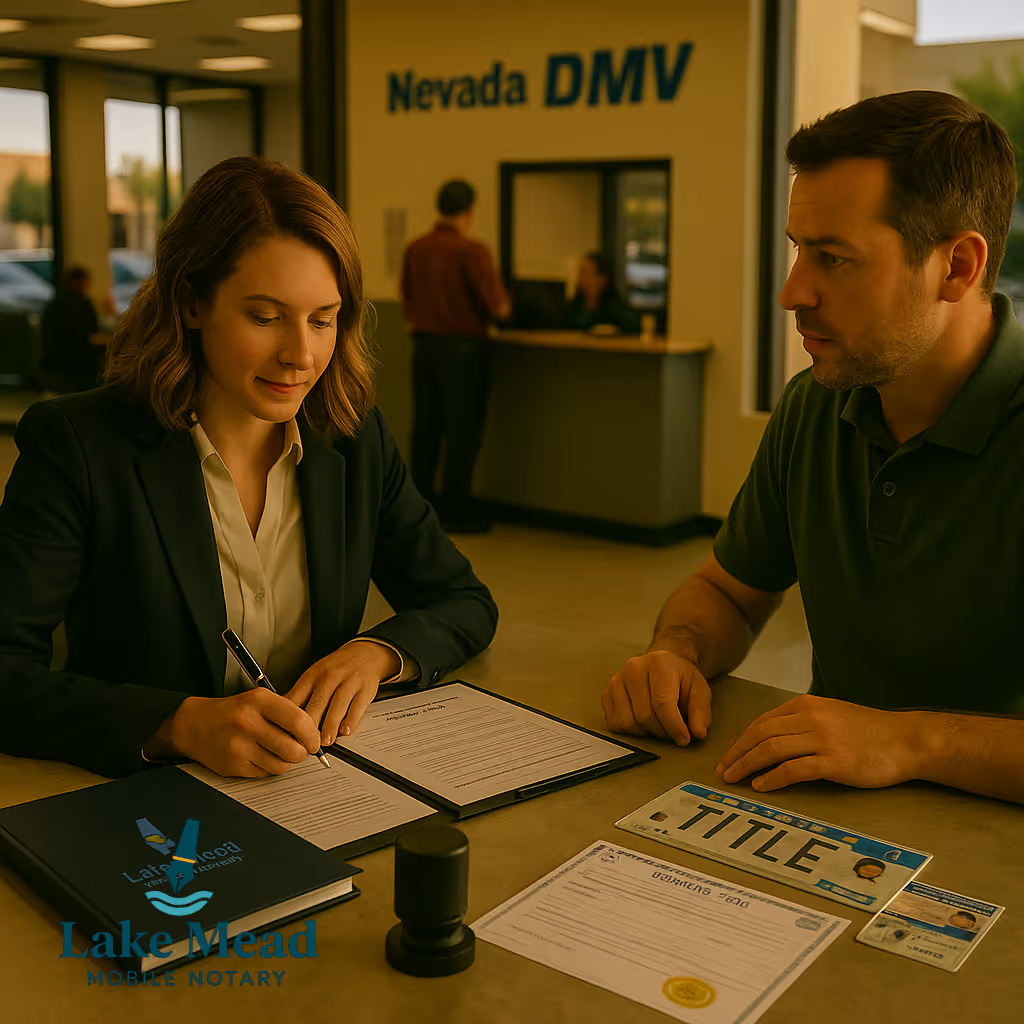
Nevada electronic lien and title records are handled through the DMV and participating lienholders. A notary cannot release an electronic lien, print a title, or convert an ELT record. Lake Mead Mobile Notary can help when your related title transaction calls for a prepared document that actually requires notarization, such as a vehicle power of attorney, duplicate-title application, printed-title lien release, or sworn lienholder affidavit.
Nevada DMV Form Notice
Lake Mead Mobile Notary can notarize a prepared DMV or vehicle-related document. We cannot decide which form your transaction requires, determine vehicle ownership or signing authority, or tell a tow yard, lienholder, law-enforcement agency, or the Nevada DMV what it must accept.
For questions about a title, registration, lien, duplicate title, ownership transfer, vehicle record, or Nevada DMV form, contact the Nevada Department of Motor Vehicles before scheduling a notary.
For a tow-yard or impound release, confirm the exact requirements with the tow yard, releasing agency, lienholder, or police department . Ask which document, signer, identification, wording, and original-copy format they will accept.
Once you know the exact document, required signer, and requested notarial act, contact Lake Mead Mobile Notary for the appropriate appointment. Tow-yard authorization letters are handled by phone only after the releasing facility confirms what it requires.
Lake Mead Mobile Notary is not the Nevada DMV and is not a DMV representative. We provide services through notaries commissioned by the Nevada Secretary of State, but we are not a government agency, tow yard, law-enforcement agency, lienholder, title company, or law firm. We do not select DMV forms, determine ownership, establish signing authority, interpret agency requirements, or guarantee title issuance, registration, lien resolution, removal of a police or administrative hold, or vehicle release. Notarization verifies the requested signature or sworn act; it does not make the underlying vehicle transaction acceptable.
Nevada electronic lien and title records are controlled through the DMV’s ELT process and the lienholder’s electronic release, not through a notarial certificate. If an ELT lien is satisfied, the lienholder must release the lien electronically; a printed-title lien release form does not clear an electronic title record. Notarization may still be needed for a separate prepared document, such as a duplicate-title application, vehicle power of attorney, printed-title lien release, statement of facts, or electronic-lienholder reassignment affidavit. Lake Mead Mobile Notary can meet the required signer in the Las Vegas area to complete the requested notarial act on a ready vehicle-title document, but does not release liens, print titles, choose DMV forms, verify ownership or lien status, submit DMV paperwork, or guarantee acceptance.
Direct Answer
In Nevada, an electronic lien and title record is controlled through the DMV’s ELT process and the lienholder’s electronic release. The notary does not access that record, release the lien, print the title, change the lienholder, or tell DMV where to mail the title.
Notarization may still be needed for a separate prepared document connected to the transaction. Common examples include a duplicate-title application, a vehicle power of attorney, a printed-title lien release, a statement of facts, or an electronic-lienholder reassignment affidavit.
ELT Basics
Nevada DMV explains that the same title documents required for a paper title are used for an electronic title. The difference occurs when the title is ready to issue: instead of a paper certificate being mailed at that stage, an electronic notification goes to the lienholder.
When the electronic lien is satisfied, the lienholder sends the lien satisfaction electronically to DMV. DMV then processes a new title without the lienholder listed and mails the resulting title according to the information supplied through the title process.
Financed or leased vehicles may not produce a paper title for the registered owner while the lien remains active.
For an ELT title, the lienholder must release the lien through the electronic process.
A buyer, seller, lender, dealer, or representative may still need a properly signed DMV form or authorization document.
Document-Specific Notarization
Used when a Nevada title is lost, stolen, mutilated, or otherwise needs replacement. The current form must be notarized or witnessed by an authorized Nevada DMV representative.
Applies to a printed title. The current form expressly says an electronic title record must be released electronically by the lienholder.
Lets the registered or legal owner grant vehicle title or registration authority to an attorney-in-fact. It uses sworn wording and has original-signature limits.
Used for a lienholder reassignment request and must be notarized or witnessed by an authorized Nevada DMV representative.
Private Sale Planning
If the seller has a loan or lease, the lienholder or lessor usually controls the title until the obligation is satisfied and the proper title path is completed. A notarized bill of sale, authorization letter, or power of attorney does not replace the title-release process.
If outside financing is involved, the buyer’s financial institution may submit title documents and become the lienholder through the ELT system. That lender-controlled title process is separate from the notarial act on any prepared document the parties bring to the appointment.
Paper vs Electronic
The most important distinction is whether the lien is attached to a printed title or an electronic title record. VP-186 is for a printed title. For an electronic title, the lienholder must release the lien electronically.
If a released title is later lost or the title document itself needs to be replaced, a duplicate-title application may become relevant. That is a different document with its own signer, certificate, and DMV requirements.
Before the Appointment
Service Limits
We can meet the required signer, verify identity, administer an oath when required, take an acknowledgment when required, and complete the notarial certificate.
Only the lienholder can complete the electronic lien-release action through the appropriate title process.
The customer, lender, DMV, dealer, attorney, or receiving party must provide the correct form and instructions.
DMV, a lienholder, lender, buyer, seller, dealer, or out-of-state agency decides whether a document satisfies its requirements.
Common Questions
No. ELT lien release is handled electronically by the lienholder. A notary may only notarize a separate prepared document that calls for a notarial act.
No. VP-186 says it can only be used to release a lien on a printed title. If the title is an electronic record, the lienholder must release the lien electronically.
A duplicate-title application may be the relevant document, depending on the title record and recipient instructions. The application has its own signer and certificate requirements.
No. A bill of sale may support a transaction, but it does not release an electronic lien or replace the title record. Confirm the title path before signing transfer documents.
Book a Prepared Document
Book after the lienholder, DMV, lender, dealer, buyer, seller, or receiving party confirms the exact document and required signer. Lake Mead Mobile Notary can meet the signer in the Las Vegas area for a prepared vehicle-title document that actually requires notarization.


.avif)


